#Ferguson & Elsewhere, Blotter

So wait, are there racial disparities in US policing or not? (Answer: YES!)

If you’re like me, you may have had two academic articles with seemingly conflicting arguments run through your Facebook feed lately.  The first, an article by Cody T. Ross published via PLOS ONE uses a multi-level Bayesian analysis to conclude that there exists

evidence of a significant bias in the killing of unarmed black Americans relative to unarmed white Americans, in that the probability of being {black, unarmed, and shot by police} is about 3.49 times the probability of being {white, unarmed, and shot by police} on average

The other, written by economist Roland G. Fryer and covered extensively in the New York Times Upshot column, concludes that in the case of “the most extreme use of force – officer-involved shootings – we find no racial differences in either the raw data or when contextual factors are taken into account.”

How can such diametrically opposed claims be made simultaneously in reputable scientific journals?  While much of these claims seems to rest in a domain of advanced statistics with which anthropologists typically feel less confident, the key to understanding their different claims actually might depend on a more “ethnographic” sense of the data sets they build upon.

Continue reading

Standard
DragNet

DragNet: April 20 – May 3, 2015

"I think you have to have a shared collective memory of the past to recognize another human being," writes Lawrence Jackson. His post, On Becoming More Human, examines the recent protests against police violence in Baltimore from his perspective as an African American man.

“I think you have to have a shared collective memory of the past to recognize another human being,” writes Lawrence Jackson. His post, On Becoming More Human, examines the recent protests against police violence in Baltimore from his perspective as an African American man.

I was happy to see Illana Feldman’s new book, Police Encounters: Security and Surveillance in Gaza Under Egyptian Rule, make the rounds on our twitter feed last month. In it, my former Anthropology professor at George Washington University discusses the topics of surveillance, control and police violence in Gaza during the period of Egyptian rule. Disclaimer: you’ll want to block off a few hours to tap into this one…it’s addictive from the start!

“I think you have to have a shared collective memory of the past to recognize another human being,” writes Lawrence Jackson for n plus one magazine. His post, On Becoming More Human, examines the recent protests against police violence in Baltimore from his perspective as an African American man. Jackson is a professor of African American Studies and English at Emory University, and is the author of the 2012 memoir, My Father’s Name: A Black Virginia Family after the Civil War. His post undoubtedly earns my vote for “best of the month”- if you have time for one (and only one) read today, this is it.

Those interested in coverage about the tragic police-related death of Freddie Gray shouldn’t miss NPR’s Weekend Edition that we shared late last month. In it, Scott Simon recounts his experience walking among the residents of West Baltimore in the wake of police protests. As the title attests, to many West Baltimoreans, the “largest gang is, in fact, the police.” We also recommend Ta-Nehisi Coates’ post, Nonviolence as Compliance, which was featured via The Atlantic.

What does the concept of “touch” mean, in a policing context? Mark Greif reflects on this question and more in his post, Seeing Through Police. He discusses the “rules” of police-citizen contact (i.e.- they touch you, you keep your hands to yourself), its many functions (intimidation, reassurance, “traffic direction”) and forms (hands vs. batons). What’s perhaps most intriguing about this post is its dual -and rather empathetic- consideration of police as police, and police as people. At the same time, it presents a critical and well-balanced portrait of modern police practices.

Finally, we are pleased to offer continuing coverage of the American Anthropological Association’s developing initiatives regarding police brutality. AAA recently announced they’ll be offering a working group to monitor racialized police brutality and extrajudicial violence. Co-chairs include David Simmons, Marla Frederick and Shalini Shankar. You can view the Working Group charge here.

Did I miss something? No worries- it does happen on occasion. If you have any suggestions for DragNet, or if you want to call attention to a specific blog or article, send an email to anthropoliteia@gmail.com with the words “DragNet” in the subject header and I’ll get on it!

Standard
Tip of the Cap

Social Control in the Streets and the Suburbs: Understanding the “Code of the Suburb”

By Scott Jacques

PrintCode of the Suburb, which I co-authored with Richard Wright, is based on interviews with 30 adolescents who grew up and sold drugs in middle-class suburbia. Why did they get into drug dealing? How did they procure and distribute their supply? How did they prevent and respond to victimization, legal trouble, and parental problems? Why did they quit? The answers are to be found at the intersection of the dealers’ attempts to be cool while simultaneously pursuing conventional success. This is the book in a nutshell.

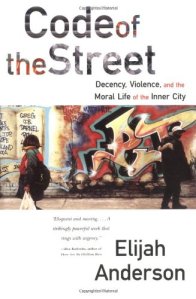
Anyone who has read Anderson’s Code of the Street instantly will recognize that he influenced my work. Both codes – street and suburban – are informal rules governing interpersonal behavior, particularly violence. The major difference between them is that the code of the street maintains that violence is a good, or at least an acceptable, way to handle conflict, whereas the code of the suburb holds the opposite to be true.

In my book, the code of the suburb revealed itself in how the sellers responded to being stolen from. The stereotypical understanding of dealers is that they abide by the code of the street and, therefore, their modal response to victimization is violent retaliation. Yet the suburban dealers rarely acted as vigilantes, and even when they did, minor bruises rather than bullet wounds were the result. Instead, they responded to victimization with more peaceful means, such as trying to talk out a resolution with the offender, cutting them off, or doing nothing. When I asked the dealers to explain their nonviolent responses, they often said things like “I don’t want to hurt somebody” and “Better to write stuff like that off.”

Though someone may have uttered it before me, to my knowledge I coined the phrase “code of the 51fN7YSRfnLsuburb.” What I like about it is that people instantly get what it is that I am referring to, so long as they are already familiar with the code of the street. However, what I label the code of the suburb is very similar to what M.P. Baumgartner, author of The Moral Order of a Suburb, calls a “philosophy of moral minimalism.”
Referring to this philosophy, Baumgartner explains that

[T]he most basic component of this system is a strong conviction that conflict is a social contaminant, something to be prevented if at all possible and to be ended quickly once begun.

She goes on to further describe this philosophy, which includes being embarrassed by embroilment in public conflict, a negative attitude toward violence, and positive opinions of toleration and avoidance. A testament to her work, and why I admire it, is that she more or less predicted and described my participants’ orientation to conflict years before they ever took up drug selling.

Works Referenced

Anderson, Elijah. 1999. Code of the Street: Decency, Violence, and the Moral Life of the Inner City. New York: W.W. Norton & Company.

Baumgartner, M. P. 1988. The Moral Order of a Suburb. New York: Oxford University Press.

Scott Jacques is an Assistant Professor of Criminal Justice and Criminology at Georgia State University. His work has been published in journals such as CriminologyCrime & DelinquencyThe International Journal of Drug PolicyThe Journal of Research in Crime and DelinquencyJustice Quarterly, and Theoretical Criminology. His book (co-authored with Richard Wright) is entitled Code of the Suburb: Inside the World of Young Middle-Class Drug Dealers (University of Chicago Press).

Standard
DragNet

DragNet: March 23 – April 5, 2015

chicago gangs

“What would it take for today’s gang members to bring peace to the neighborhood?” writes Laurence Ralph in his post for Anthropoliteia last month. Ralph recounts the story of his friendship with an elderly member of one of Chicago’s most notorious gangs, The Divine Knights. But the story reveals the little known history of the gang, as well as a strikingly “tender” side of the group previously known only among local community members.

To record, or not to record; that is the question! Last month, we shared Carlos Miller’s post for Photography is Not a Crime. According to legislators in Texas, members of the general public should not be allowed to film or record officers by law. But a policy being proposed by a political duo in Colorado begs to differ. Joe Salazar and Daneya Esgar have teamed up to co-sponsor a bill that would award up to $15,000 (plus attorney fees) to citizens who have cameras or recording devices confiscated by officers without a warrant. You can read a copy of the proposed bill here and decide for yourself.

The small town of Madison, Wisconsin is putting a whole new spin on the meaning of “officer next door” in an attempt to foster peaceful interactions between police and local community members. Melissa Block hosts this episode of All Thing Considered for NPR and details how officers and neighborhood residents have reacted to the police department literally moving in next store to high crime areas. The key to the community initiative’s success apparently lies in its exposure of officers and citizens to one another in everyday contexts- both good and bad.

If you, like me, have been amazed to discover how very impossible it is to obtain even the slightest estimates about lethal use of force by police for any given year, you’ve got to read Tom McCarthy’s post for The Guardian ASAP. Finally, we learn why there are no reliable estimates about police-related homicides: it was too difficult, so “we just gave up”. (Yeah, I’m not buying it either!) Although the Bureau of Justice Statistics arguably places a number on all kinds of similar measures, they’re reporting difficulties assessing lethal use of force nation-wide. Among other stumbling blocks are incomplete or never-filed reports (from departments such as NYPD) and inconsistent reporting. Now it’s time to play the waiting game to see if Obama’s newly created Policing Task Force will follow through with his request for “more” (or any?) data…

“What would it take for today’s gang members to bring peace to the neighborhood?” writes Laurence Ralph in his post for Anthropoliteia last month. Not that we need to remind you, but the newest Tip of the Cap feature is up and hungry for your feedback. Ralph recounts the story of his friendship with an elderly member of one of Chicago’s most notorious gangs, The Divine Knights. But the story reveals the little known history of the gang, as well as a strikingly “tender” side of the group previously known only among local community members. Laurence Ralph is an Assistant Professor of African and African American Studies as well as Anthropology at Harvard University. If you leave the post wanting more, be sure to check out his book, “Renegade Dreams: Living Through Injury in Gangland Chicago“.

To end on a fun note (and just because I’m feeling random), treat yourself to browsing through Radio Free Europe Radio Liberty’s eclectic collection of bizarre Soviet Police posters from back in the day. Among my own personal favorites are, “concerned looking smoking guy” and “Gee! My facial angle looks great in this lighting!“. If you’re also the kind of person that likes a healthy amount of “crazy crap” on your walls, you’ll thank me for including a link that can hook you up with your next police-inspired addition.

Did I miss something? No worries- it does happen on occasion. If you have any suggestions for DragNet, or if you want to call attention to a specific blog or article, send an email to anthropoliteia@gmail.com with the words “DragNet” in the subject header and I’ll get on it!

Standard
Tip of the Cap

Un-silencing the Gang: A Past Retold in the Present that Shapes Possible Futures

We would like to welcome Laurence Ralph in this latest edition of our feature, Tip of the Cap.
9780226032719
I got my start in gang research from working with non-profits. There, I met a sixty-eight year-old gang member named Mr. Otis. At first it surprised me that someone so old would adamantly affiliate with one of Chicago’s most notorious gangs, the Divine Knights. But I soon learned that the idea of “the gang” as a group of violent criminals meant something very different to Mr. Otis. For him, the gang was an organization that could actually improve the community, if given the chance. And he wanted to curate a gang exhibit to prove it. Continue reading
Standard
DragNet

DragNet: February 23 – March 8, 2015

Spencer Ackerman's post for The Guardian  investigates a US-based policing "black site" known simply as Homan Square. Once inside the walls of this Chicago warehouse, constitutional rights are said to go out the window.

Spencer Ackerman’s post for The Guardian investigates a US-based policing “black site” known simply as Homan Square. Once inside the walls of this Chicago warehouse, constitutional rights are said to go out the window.

It would appear that Ali Wajahat is not the only name in modern-day cop shows with a twist according to a post by Mike Hale of NYtimes.com. Comedian Colin Quinn’s series, creatively dubbed “Cop Show”, debuted in mid-February and is quickly accumulating nods of approval for its amusement factor. Look for cameos by big-wig comedians, such as Jerry Seinfeld and Jim Gaffigan, on this mock-u-mentary hit. You can catch up on the series- which is currently available for streaming- on LStudio.com.

In far less cheery news, we also shared Spencer Ackerman‘s post for The Guardian, which investigates a US-based policing “black site” known simply as Homan Square. Once inside the walls of this Chicago warehouse, constitutional rights are said to go out the window. Lawyers interviewed by Ackerman report that it has become standard practice to assume apprehended individuals who remain “unlocatable” through otherwise standard procedures have landed themselves within the Homan black box. Follow ongoing coverage of the investigation by The Guardian here. We also recommend Alexandra Starr of NPR’s post for Codeswitch we featured earlier this month.

A previous DragNet post asked, “When officers behave questionably, who you gonna call?” It appears Shea Serrano -staff writer for Grantland– has taken it upon himself to provide an answer to our quandary. His post, The Second Banana Cop Matrix: A Definitive Guide to Who You Should Call for Backup wins my non-existent prize for best satirical post of the month (plus, after reading Homan Square coverage we could all use some comic relief, right?). Worthy of note is his shout out to my own personal favorite police “side-kick” ever: the kid from Last Action Hero.

The President’s Task Force on 21st Century Policing released some recommendations for improving police-citizen relations this month, beginning with the regular measuring of “community trust”. Carrie Johnson‘s post for The Two-Way also recaps the Task Force’s stance on the ever-popular “body-worn camera solution“, with concerns about privacy packing a powerful punch. These recommendations came just days before the killing of Philadelphia Police Officer Robert Wilson, which is especially poignant given that Commissioner Charles Ramsey has a position on the Task Force. Also noteworthy is the fact that Wilson’s district is the site of PPD’s current body-worn camera pilot project.

Also on the topic of police-citizen violence, a DOJ investigation into patterns of police use of force in Ferguson, Missouri found “alleged sweeping patterns of discrimination” within the city’s police department. But the discrimination doesn’t end there. The report also found that blacks were “68% less likely than other races to have their cases dismissed by a municipal court judge”. My personal LEAST favorite statistic, you ask? Of 21,000 total Ferguson residents, 16,000 of them were found to have outstanding warrants (often for minor violations). Stay tuned to our twitter feed for ongoing coverage!

Did I miss something? No worries- it does happen on occasion. If you have any suggestions for DragNet, or if you want to call attention to a specific blog or article, send an email to anthropoliteia@gmail.com with the words “DragNet” in the subject header and I’ll get on it!

Standard
DragNet

DragNet: January 1-12, 2015

Police_violence

Police Chief Charles Ramsey and George Mason’s Laurie Robinson were selected by President Obama to serve on the White House’s newly created Task Force on 21st Century Policing. The President hopes the task force will come up with solutions for improving police-citizen interactions by mid-February.

Body cameras aren’t a quick fix for police violence, writes Jennifer Dawn Carlson in her post for LA Times. The failure of juries to indict Darren Wilson or Daniel Pantaleo in the wrongful death cases of two unarmed citizens has left many pointing to body camera technology as an obvious solution for ending police-citizen violence. Carlson closes her piece with a powerful question: if citizens equipped with cameras aren’t enough, will officers equipped with cameras prove to be?

Speaking of the police-citizen rift, we shared NPR’s Renee Montagne’s interview with Philadelphia Police Commissioner Charles Ramsey and Laurie Robinson of George Mason University. Ramsey and Robinson were selected by President Obama to serve on the White House’s newly created Task Force on 21st Century Policing. Obama hopes the task force will come up with solutions for improving police-citizen interactions by mid-February.

Others have suggested a large portion of the police-citizen problem is arguably caused by a lack of knowledge about who polices the police (and how thoroughly). Alex Vitale’s post for The Nation highlights a selection of relevant literature about the subject to get the conversation going.

What on earth would a police department with an enforcement population under 29,000 people need “two bomb disposal robots, 10 tactical trucks and 35 assault rifles” for? We shared Shawn Musgrave, Tom Meagher and Gabriel Dance’s post from the Marshall Project, entitled “The Pentagon Finally Details its Weapons-for-Cops Giveaway” earlier this month. They detail which military grade equipment many local departments have received from military surpluses.

What’s on Anthropoliteia’s Blog Menu for 2015, you ask? Find out here– where you’ll also find a listing of our most popular posts of 2014. Top blogs included Jennie Simpson’s “Do Police Departments Need Anthropologists?” and “Little Green Men: Russia, Ukraine and post-Soviet Sovereignty” by Alexi Yurchak.

Lastly but importantly, Anthropoliteia will be launching a new forum in light of the recent Charlie Hebdo attacks. In the meantime, you can peruse our list of useful commentaries below:

Did I miss something? No worries- it does happen on occasion. If you have any suggestions for DragNet, or if you want to call attention to a specific blog or article, send an email to anthropoliteia@gmail.com with the words “DragNet” in the subject header and I’ll get on it!

Standard
DragNet

DragNet: November 18 – December 1, 2014

Although we here at Anthropoliteia don't have any “existential answers" about how to process the recent events in Ferguson, we hope to provide a safe space for readers to reflect about and share their reactions.

Although we here at Anthropoliteia don’t have any “existential answers” about how to process the recent events in Ferguson, we hope to provide a safe space for readers to reflect about and share their reactions.

Continue reading

Standard
#Ferguson & Elsewhere, Pedagogy

Anthropoliteia reacts to #Ferguson

It’s hard to know what exactly to say, to think, to feel or how to react at a time like this; even as a scholar of police.  Which is not to say that everything in the case is terribly ambiguous.  Quite the opposite: another young black man has been the victim of a deadly and unaccountable state violence in front of our very eyes.  I suppose the disorientation lay in how to move forward, and for that I have no strong answers.

Embed from Getty Images

Having said that, several of us at Anthropolitiea have been active on Twitter, I imagine in an effort to make sense of exactly that existential question. This is not dissimilar to my own reaction during and after the Trayvon Martin/George Zimmerman affair.  Below are some of our thoughts, as we form them:

Continue reading

Standard