CFP: Special Issue on “Ethnographies of Security”
See below a CFP for a special issue of the journal Qualitative Sociology on “Ethnographies of Security,” to be guest edited by Anthropoliteia contributor Rebecca Hanson
Standard
Organizers: Victor Kumar (Johns Hopkins U) and Amrita Ibrahim (Georgetown U)
At a time when many aspects of law enforcement are coming under increased scrutiny, anthropologists have a renewed opportunity to investigate questions around police and policing. What can anthropology bring to an area of research whose terms, methods, and theories have traditionally been set by the disciplines of sociology and criminal justice? What approaches allow us to navigate this contested domain and understand its forms and effects inside and out, from those “on the beat,” to the recipients of police terror, from activists calling for justice to those whose radical alterity renders them “no-bodies” (Silva 2009)? How does an anthropologist’s loyalty to the state (our law-abidingness) affect the ways they take up our positions with respect to policing? One answer suggested by some anthropologists of police (Garriott 2013, Karpiak 2016) is that investigations are directed at the boundaries of police as a field of inquiry. Rather than assuming the police to be a bounded field site, it can be understood instead as a refractive lens that extends beyond policing as an official institution and reverberates in response to broader social phenomena. Others have argued that we should seek to develop new lexicons to describe, denounce, and theorize racialized policing practices and put them in the context of a broader security-knowledge system that informs subjugation at large (James 2006, Alves and Vargas 2015). In this panel, we seek new critical perspectives on longstanding issues involving police: violence, the body, community, citizenship, and rights. We are interested in exploring how issues such as racial and sexualized violence are positioned across the permeable boundaries between the police and subjects of enforcement without discarding critiques coming out of both the popular and scholarly spheres that have identified forms of structural violence in police work. Whether dropping the notion of a clear and fixed boundary (a “thin blue line”) or reanalyzing the police as operating within regimes of domination, ethnography has the potential to show how policing is both continuous and distinct from the broader social contexts in which it is embedded and attend to the diverse forms of life that fall under the heading of police. We argue that such modes of anthropological understanding can ultimately contribute greatly to projects of police reform or abolition.
Please submit your abstract of 250 words to Amrita Ibrahim at amritaibrahim@gmail.com and Victor Kumar at victorakumar@gmail.com by [UPDATE] April 13, 2016.
The New York State Department of Corrections and Community Supervision (NY DOCCS) operates fifty-four prisons, which confine approximately 53,565 people. This captive population is ninety-six percent male; fifty percent black, twenty-four percent latino and twenty-four percent white. Though half of them were convicted for charges that occurred within New York City, most of them are confined in prisons located in distant, rural parts of New York State.[1]
 I entered the visitor waiting room, a trailer that rests on the grounds of the prison. Though I arrived at 7:45am, a full 45 minutes before the start of visiting hours, the inside of the trailer was already full. I signed in at the rear of the space where two Correctional Officers (C.O.s) stood behind a tall wooden desk. I took one of the only available seats, which happened to be right next to them.

Two bits of news concerning both Anthropoliteia and the journal Political and Legal Anthropology Review (PoLAR):
First, we’re all so excited that our own William Garriot, along with friend-of-Anthropoliteia Heath Cabot, have taken over as co-editors of the journal. We can’t wait to see what a Cabot-Garriot tenure will bring!
Also of note to readers of this blog: PoLAR just recently published an Open Access Virtual Issue on “The Promise and Pathos of Law,” which includes several recent and classic articles on the topic (including my own article “Of Heroes and Polemics: the ‘policeman’ in urban ethnography“) as well as new and original “supplementary” postscripts in which each author reflects on their contribution through the lens of time. My own essay focuses on the exciting development of “anthropology of policing” since the publication of “Of Heroes…” in 2010.
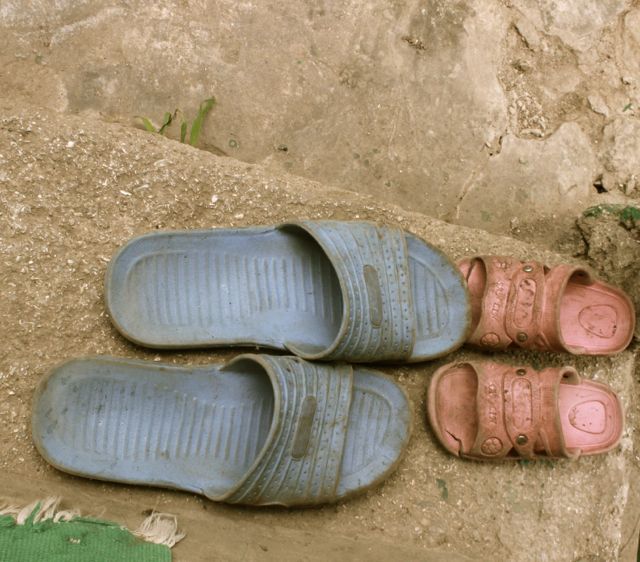
As the war in Eastern Ukraine grinds on, and diplomats have forgotten about occupied Crimea, there are new realities shaping the way Ukrainians are born, live, and die in this war-torn country.
Most readers will be aware that Russian troops entered Crimea in Spring, 2014 and, without a single shot, took control of key military installations, held a bogus referendum, and set up a new government. The residents of that occupied territory are now caught, so to speak, between Ukraine and Russia. This post is based on ethnographic fieldwork with individuals coming out of the occupied territories into free Ukraine in May and June 2015..
Abstracts are currently being solicited for a special issue of the journal Theoretical Criminology on the theme “the new anthropology of police as a mode of critical thought” (see full description below). Send abstracts for consideration by August 1st 2015 to kkarpiak@emich.edu. Full drafts should be ready to submit for peer review by September 15th, 2015.

Conference on Global Policing, Oxford UK (23 and 24 April 2015)
Recently several of us here at Anthropoliteia were able to participate in a conference organized by Ian Loader, Ben Bradford, Jonny Steinberg and our own Beatrice Jauregui in preparation for a volume they are editing, the SAGE Handbook of Global Policing. Kate West, has a nice summary of (only a small portion of) some of the papers over at the Criminology at Oxford Blog. Here is an excerpt that may be of particular interest to our readers:
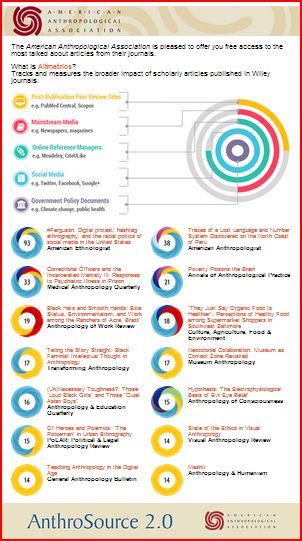 The AAA has decided to feature the “most-discussed” articles (as measured by Altmetrics) from Anthrosource by making them temporarily open-access. Among these are several articles that might be of interest to our readers:
and (*ahem* cough, cough)
The Editors of Anthropoliteia are pleased to introduce our new team member, Sean Miller, who will be taking on co-editing responsibilities (along with the David Thompson) for the In The Journals feature.
Sean currently a Masters student in anthropology at the School of Sociological and Anthropological Studies at the University of Ottawa, having earned a B.A. from Concordia University in Montreal. His work focuses on the perspectives on gentrification of residents of South Brooklyn with regards to their neighborhood, following the developments surrounding recent residential and commercial building developments in the surrounding neighborhoods of Clinton Hill, Williamsburg, and Bedford-Stuyvesant. His research interests, apart from gentrification, include governance, inequality, representation, and popular culture.
Having Sean on board will allow us to increase the frequency of ITJ to a monthly series, which will also allow us expand the scope and depth of our coverage.
Here at Anthropoliteia we’re always looking for new ways to explore new technologies to broaden the discussion on police, security, law and punishment from global and anthropological perspectives. In this vein, the Editors are happy to announce a new (semi) regular series of video conversations that we’re calling Interrogations. Although the series will be edited by Kristen Drybread and Johanna Rohmer, this first episode was moderated by our General Editor, Kevin Karpiak.
This first conversation consists of a discussion with Dr. A. Lynn Bolles that begins with the events leading up to and occurring at the 2014 American Anthropological Association Meetings in Washington D.C. but traverses other issues in the anthropology of policing, including the specific challenges and opportunities anthropologists face in their intersecting roles as scholars, educators, and political subjects.
 Anthropoliteia