Announcements, Conferences

Anthropoliteia @ #AAA2014

As long time readers may know, we like to offer a run down of the sessions, papers and events at the Annual Meetings of the American Anthropological Association that may be of interest for readers of this blog.  This has been made considerably easier the last couple of years by AAA’s personal scheduler function, which allows for the creation of sharable schedules.  You can see a full* list of these papers and sessions via our shared Google Calendar, here.  If you’re also a user of Google Calendar, you can easily copy individual events to your own schedule there.

In particular, though, I’d like to highlight a few events that are either directly sponsored or otherwise associated with Anthropoliteia.net.  Perhaps the most important of these is the first ever Anthropoliteia “Tweet-Up.”  Based on the previous success of similar events hosted by Savage Minds (among others), our Editorial Board has decided to extend an invitation to anyone interested to come meet with us–along with a select group of our various Section Editors and Contributors–to discuss, imbibe, and otherwise commiserate.  You can find** us Thursday, December 4th from 6-8pm at Murphy’s Irish Pub, around the corner from the conference hotel [UPDATE: Harry’s Pub, in the Wardman Park Marriott].

Besides the tweet-up, there are a few official sessions that come out of collaborations on Anthropoliteia and the CFP we circulated earlier this year:

On Wednesday, December 3rd from 4-5:45pm in Washington Room 3 of the Marriott Wardman Park will be the panel “Thinking Through Police, Producing Anthropological Theory: police ethnography as a tool for critical thought,” organized by and featuring yours truly, along with Avram Bornstein (John Jay-CUNY), Mirco Gopfert (U Konstanz), Beatrice Jauregui (U Toronto), Matthew Wolf-Meyer (UC Santa Cruz) and Matthew Hull (U Michigan).

On Friday, December 5th from 6:30-8:15pm in the Diplomat Ballroom of the Omni Shoreham will be a roundtable on “Critical Potentialities of the Anthropology of Policing.  Accounts of Police, Power and Politics on Public Display?” organized by our own Paul Mutsaers (Tilburg U) and featuring Beatrice Jauregui (U Toronto), Eilat Maoz (U Chicago), Simanti Dasgupta (U Dayton), Daniel Silva (Unicamp), Michelle L Stewart (U Regina), and Craig William Schuetze (UC, Santa Cruz).

Finally, on Saturday, December 6th from 9-10:15am, again in the Diplomat Ballroom of the Omni Shoreham, will be the panel “Violence and Ethics in Ethnographies of Security in Latin America,” organized by Stephanie Savell (Brown U), guest editor of this summer’s Forum “Security in Brazil: World Cup 2014 and Beyond“, and featuring Erika Robb Larkins (U Oklahoma), Aldo Civico (Rutgers U), Stephanie Savell (Brown U), Kristen Drybread (University São Paulo/ NEV) and Danial M. Goldstein (Rutgers U).

We hope to see you all there!

* As always, if you notice any oversights or would like to suggest additions send an email to anthropoliteia@google.com
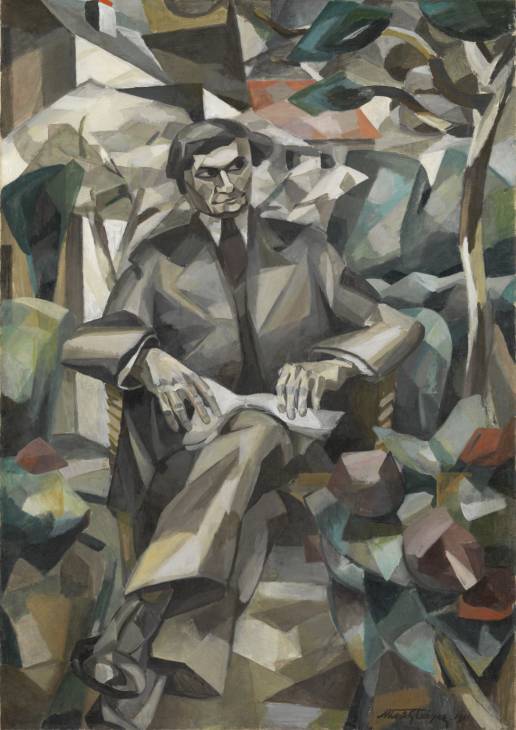
** If you’re not sure who to look for, I basically look like this, possibly with shaggier hair.  Also, I’ll try to be attentive to twitter–@anthropoliteia and @kevinkarpiak–especially towards the beginning


Standard
Announcements, Call for papers

CFP: Anthropologists at the Intersections of Applied Anthropology and Criminal Justice

In March 2015, the Society for Applied Anthropology will hold its annual meeting in Pittsburg, PA. The following Call for Proposals might be of interest to some of our Anthropoliteia readers. Please direct questions to the organizers at their email addresses below.

Seeking contributions to the panel “Anthropologists at the Intersections of Applied Anthropology and Criminal Justice” at the Society for the Applied Anthropology Meeting in Pittsburg (March 24-28, 2015)

Patricia San Antonio (CRS, Inc), Jennie M. Simpson (American Anthropological Association) and Scott Catey (National Council on Crime and Delinquency)

Anthropology has a long history of scholarship on crime, security, law, and justice, including significant work by major figures in the discipline, such as Malinowski, Nader, and the Comaroffs, among others. Yet, work by applied and practicing anthropologists in criminal justice settings and on criminal justice systems, including policing, courts, corrections, and policy, has been notably missing from discussions of crime, security, law and justice in academic scholarship. In this session, we seek to bring together practicing and applied anthropologists working in criminal justice fields to highlight the contributions made by these anthropologists to scholarship, policy, direct services and other areas of applied practice, as well as the potential of this work to inform theoretical practice. Proposals are welcome that highlight anthropological research, policy and/or direct service work in criminal justice. Topical and geographic areas are open.

Please, send your abstracts to Patricia San Antonio (psananton1@gmail.com), Jennie Simpson (jenmsimpson@gmail.com) and Scott Catey (catey.scott@gmail.com) by October 6th. Selected session participants will be notified by Friday, October 10hPlease note that session participants must register and pay for the conference before the abstract deadline on October 15th.

Standard
Conferences

Ethnography and Policing workshop, Institute for Advanced Study

2014_05_06_IAS_Workshop_Group

Workshop Participants. Back row, L to R: Julia Hornberger (Wits, South Africa), Jeffrey Martin (Hong Kong U, Taiwan), Daniel Goldstein (Rutgers, Bolivia), Susana Durao (U Campinas, Portugal), Duncan McCargo (Leeds U, Thailand), Didier Fassin (IAS, France), Steven Herbert (U Washington, United States), Clara Han (Johns Hopkins, Chile), Elif Babül (Mount Hollyhoke, Turkey). Front row, L to R: Beatrice Jauregui (U Toronto, India), Helene Maria Kyed (Dansk IIS, Mozambique).

From May 4-7, 2014, a workshop was held at the Institute for Advanced Study on the topic of “Ethnography and Policing.” Below is a short summary of the workshop’s premise and scope, as described by Didier Fassin, who organized the gathering.

In the past half century, there has been a considerable amount of scientific literature in criminology, sociology, political science and legal studies on urban policing, that is, on the practice of law enforcement mostly in the poor neighborhoods of large cities. Part of this work is grounded on some form of participant observation, which complements other techniques such as interviews or questionnaires, and nourishes the analytical and theoretical arguments developed by the authors. However, this ethnography rarely appears as such. It is usually not presented, save occasionally in the form of short vignettes, or discussed, from the perspective of the specific contribution of this method. Significantly, until recently, anthropologists themselves seemed to ignore policing practices.

In the past decade, however, this situation has begun to change, as scholars increasingly and explicitly include ethnographic elements in their study of police work. The objective of the workshop was to bring together social scientists who have conducted research on urban policing in different parts of the world, using ethnography, in order to collectively reflect on the conditions, potentialities and limits of this method, the problems of interpretation and the ethical issues it raises, and the way local findings can be related to larger historical context and sociological issues. The general idea was to take ethnography seriously rather than as a mere background rendered invisible in the process of writing. Considering the importance of public debates on policing in contemporary societies, particularly on the way law is enforced in poor neighborhoods, which raises questions about racial discrimination, display of violence, and reproduction of an unequal social order, the exchange of ethnographic experiences has been rich. The outcome of this workshop will be a collective volume.

Standard
Announcements, Book Reviews

New Feature: Book Reviews

Over the last couple of months we’ve already introduced two new suites of features: the first being a series of periodic digests from academic journals, around the web (which we call DragNet) and in the news that we’re collectively calling “Round Ups” and the second being the collection of original contributions from researchers From the Field, which we’ve further broken down into impressionistic Dispatches and more fully-developed Dossiers.

Now the editors of Anthropoliteia are happy to announce the first in a third “suite” of features which we’re collectively calling “Bibliographemes”.  The neologism is a a play on Roland Barthes’ term “biographeme,” of which Richard Elliott, drawing on Seán Burke, writes: Continue reading

Standard
Announcements

Welcome to the new Anthropoliteia.net !

© The estate of Edward Wolfe

P.C. 77 by Edward Wolfe c.1927

We are happy to continue announcing the exciting changes that are rolling out here at Anthropoliteia. You’ve already heard about our new snazzy design and two of our new features, “Dispatches” and “In the Journals“.  In the meantime we’ve also snuck in our very own domain name: anthropoliteia.net  For most of you this should make very little difference, in any.  Your browser and rss reader should automatically redirect you from our old WordPress address to the new one, but this change affords us a greater deal of flexibility with the site design going forward. Continue reading

Standard
Announcements, In the Journals

New Feature: In the Journals

The editors of Anthropoliteia are pleased to announce yet another in a planned series of new features that will be appearing here on the blog over the coming month.  We’re calling this new feature, which will be part of the “Round Ups” suite of regular features, “In the Journals” and it will  digest anthropoliteia-related articles and special issues appearing in academic journals, on a quarterly basis (for now). 

In addition I’m happy to introduce one of our new “Section Editors,” David Thompson.  David is currently a PhD candidate in Anthropology at the University of California, Berkeley, having earned a B.A. from the University of Sydney. His work focuses on prisons in Rio de Janeiro as institutions that subvert as much as they reinforce the established social and political order of the city; hosting different legal, political, humanitarian, evangelical, community and narcotic projects that then bleed out into the urban fabric of a city saturated with discourses on crime and justice.  We’re super happy to have him on board.

If you have any suggestions for journals we should be keeping tabs on for this feature, or if you want to call our attention to a specific issue or article, send an email to anthropoliteia@gmail.com with the words “In the Journals” in the subject header.

Standard
Announcements, Call for papers

CFP Anthropoliteia-sponsored panel at the 2014 AAA Meetings

Long-time readers of Anthropoliteia may remember that some of the first “extra-curricular” iterations of the blog were at panels at the 2009 and 2010 Annual Meetings of the American Anthropological Association.  In my own humble estimation, these were extremely productive conversations, and not only because they resulted in an edited volume that was published by Palgrave Macmillan last year, of which we’re all extremely proud.

In that vein, and to broaden the conversation, we’ve decided to try sponsoring a panel on anthropoliteia-related issues this year.  If the experiment is successful, it may even become an annual thing.  Please read through the following CFP and consider offering an abstract.  Also, please pass this announcement on to anyone else that may be interested.

Call for Papers: Thinking through police, producing anthropological theory

For a session to be submitted to the 2014 Annual Meetings of the American Anthropological Association (Washington DC, December 3–7, 2014).  Dr. Kevin Karpiak (Eastern Michigan University), organizer.

Continue reading

Standard
Announcements

New feature, From the Field: Dossiers & Dispatches

In addition to our new snazzy design, we’re also planning on rolling out some big substantive changes over the next few weeks here at Anthropoliteia.

The first of these is a new feature we are going to call, collectively, “From the Field“. Posts “From the Field” will be grouped loosely into two categories, “Dossiers” and “Dispatches“.  Our hope is that both types of posts will encourage a larger reflection on the anthropology of policing, crime, punishment and security… both on this blog and more broadly.    Dossiers will consist of “digested” versions of recent publications or larger research projects in a more developed state (of which, more in the near future).

Dispatches will consist of short observations from the field, with minimal or no analysis; preludes to, or the very first tentative steps into a field.  The word “dispatch” itself comes from either the Italian dispacciare or Spanish despachar, both of them meaning ‘to expedite’ (the dis-/des- expressing a reversal of the base impacciare/empachar, ‘to hinder’).  A “dispatch,” in other words, is an unhindering.

In that spirit I’m pleased to announce our first of many planned installments of this sort from Charlie Hahn.  Charlie is an anthropologist whose recent work has examined ethics, uncertainty and force in the training of police officers, as well as the confluence of community policing strategy and the atomization of surveillance capabilities. He holds a Bachelor’s of Arts in Anthropology and Comparative Literature from the University of Washington, Seattle. This spring and summer he will be sending “dispatches” from travels in the U.S. and Central America.

Enjoy…

Standard
Announcements, Call for papers

[Extended Deadline] CFP: Bureaucracy as Practical Ethics: attending to moments of ethical problematization through ethnography

Panel to be submitted for the American Ethnological Society & Association for Political and Legal Anthropology Spring Meeting Chicago, Illinois April 11-13, 2013

A significant strain of scholarship on the anthropology of ethics suggests that, since the Enlightenment, ethical thought in the West has been reduced to sheer will to power. A key point of evidence for this claim has been the reliance on bureaucratic forms of administration, which are highlighted as examples of alienating “anti-politics” machines of indifference. This panel hopes to challenge that broad understanding of the role of ethical thought within the contemporary world by using sensitive ethnographic accounts of bureaucratic praxis to explore how ethical challenges are confronted across a variety of contexts. The goal is to use these accounts in order to open up a conversation in which anthropologists might more adequately attend to moments of ethical problematization; moments that offer concrete opportunity for ethical refiguration and, therefore, ethical thought within contemporary political forms.

If you are interested in participating in the panel, please email a proposed paper title and abstract of no more than 250 words to Dr. Kevin Karpiak (kkarpiak@emich.edu) by Tuesday, January 22nd.

[Update: Since the deadline to submit panel proposals has been moved back, I’ve decided to extend this as well: paper abstracts should now be submitted by Wednesday, February 13th.]

Standard