Announcements, Tip of the Cap

New Feature: Tip of the Cap

tip of the hat

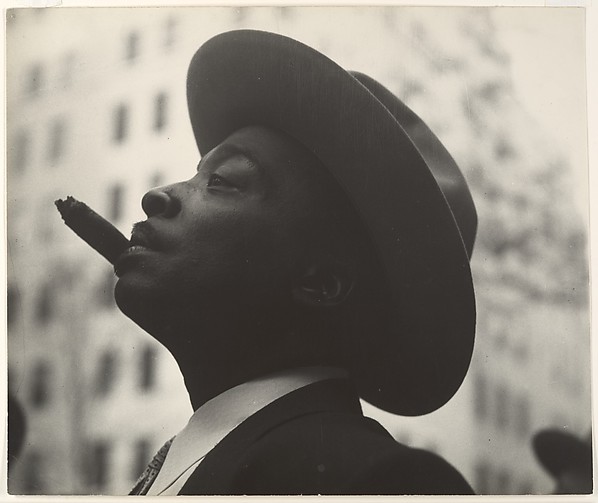
[Head of Man with Hat and Cigar] Leon Levinstein ca. 1960 © Howard Greenberg Gallery

The Editors of Anthropoliteia are happy to announce yet another addition to our “Bibliographeme” suite of features.  This new feature, which we’re calling Tip of the Cap, will be edited by Jenny Carlson, a sociologist of policing  at the University of Toronto.  You can see more about her and her work under the About Us section and at her own personal website.

The series ‘tips the proverbial hat’ to the major works and big ideas that inspire established and up-and-coming scholars alike. In it, we’ll showcase these scholars and the classic works that shaped them.

The first installment of this series is written by Randol Contreras, Assistant Professor of Sociology at the University of Toronto and author of The Stickup Kids: Race, Drugs, Violence, and the American Dream (University of California Press, 2013), and focuses on C. Wright Mill’s The Sociological Imagination.  If you are interested in seeing a scholar featured here please send an email to anthropoliteia@gmail.com with “Tip of the Cap” in the subject line. Enjoy!

Standard
Book Reviews

A new grammar of public security in Brazil

Mesquita Neto, Paulo. 2011. Ensaios sobre segurança cidadã [Essays on Citizen Security]. São Paulo: Quartier Latin/Fapesp.

Review of: Mesquita Neto, Paulo. 2011. Ensaios sobre segurança cidadã [Essays on Citizen Security]. São Paulo: Quartier Latin/Fapesp.  By Daniel Silva

Why has Brazil’s 1988 democratic constitution advanced in promoting broad civil and economic rights while leaving (almost) unchanged the regulation of the police and armed forces? What’s the impact of Brazil’s Human Rights National Program in recent efforts of democratizing Brazilian society and building up an alternative to a minimal neoliberal state? Why have some types of public security policies been defined without much clarity, especially those that target the non-white-elites? These are some of the questions that Paulo de Mesquita Neto – a Brazilian scholar in political science who prematurely died in 2008 – asks in this collection of essays that he gathered under the rubric of Essays on citizen security. The book as a whole bears the imprint of an author striving to combine the vocabulary and syntax of democratic rule with a scrutiny of public security in Latin America – a grammar not too simple to practice in a continent that during the 1960s and 1970s surrendered to several authoritarian regimes whose marks are still noticeable, if not overly prominent, in current political culture and public debates.

The book as a whole bears the imprint of an author striving to combine the vocabulary and syntax of democratic rule with a scrutiny of public security in Latin America

Continue reading

Standard
Interrogations

Interrogations: Heath Cabot and William Garriot on Policing and Contemporary Governance

Palgrave MacMillan (2013)

Policing and Contemporary Governance: the anthropology of police in practice. William Garriott, editor (Palgrave MacMillan 2013).

The editors of Anthropoliteia would like to introduce yet another in our series of new features: Interrogations, an interview series with authors and other people of potential interest to our readers.  The term ‘interrogation’ comes  the Latin inter “between” and rogare “question”.  It thus originally meant something like “to question between” (as opposed, for example, to examiner “to test, try, torture”).  Our plans for the series, which will edited by Kristen Drybread & Johanna Romer, are aimed at exploring this sense of the term.
We are happy to present to you the first in this series,  a conversation between Heath Cabot & William Garriott focused on Garriott’s edited volume Policing and Contemporary Governance: The Anthropology of Police in Practice (2013).
 

Continue reading

Standard
Book Reviews

Revisiting ‘Policing the Crisis’

 Policing the Crisis Cover
Book review– Stuart Hall, Chas Critcher, Tony Jefferson, John Clarke and Brian Roberts, ‘Policing the Crisis. Mugging, the State and Law & Order’ (2013[1978])
By Merijn Oudenampsen, sociologist and political scientist working as a PhD Candidate for the Dept. of Culture Studies at Tilburg University, the Netherlands

Revisiting “Policing the Crisis”

On the 17th of August 1972, a British newspaper reported on a violent robbery as ‘a mugging gone wrong’. The article was accompanied by the following headline: ‘As crimes of violence escalate, a word common in the United States enters the British headlines: mugging. To our police, it’s a frightening new strain of crime.’

At this point, the study ‘Policing the Crisis: Mugging, the State, and Law and Order’ first published roughly 35 years ago, begins its ever-widening exploration: from crime statistics to the police, from the media to the courts, from the state and the core beliefs of British society to the advent of Thatcherism. The kaleidoscopic nature of the book evokes associations with the HBO television series The Wire, where each season navigates a different institutional aspect of Baltimore’s social troubles: the black ghetto drugs economy, the dwindling labour market, the police and the city government, the school system and the media. In so doing, The Wire acts out a core insight of Policing the Crisis, namely that crime cannot be seen independently from the institutions that aim to control and report on it. Agencies such as the police, the courts and the media do not passively react to a given crime situation, they ‘are actively and continuously part of the whole process’ (p54). The book and the television series also share an ability to explain these complex matters in clear and accessible language. Even though a lot has changed in criminology – consider contemporary trends such as the rise of target culture and risk management – there is still much in this book that is relevant in understanding contemporary developments. At the end of this article, I will shortly aim to illustrate that by looking at the uproar concerning Moroccan immigrant youth in the Netherlands.

A moral panic

The first step taken in the book is to statistically dismantle the newspaper headline: mugging at the time is shown to be not in any way new, the major part of the escalation of crime took place in the decade before. Similar things can be said about the appeals to tougher sentencing and the media reports blaming the soft policy of judges for the alleged crime wave. In fact, longer sentences are passed and more offenders are being sentenced. What’s more, tougher sentencing is shown to have had no measurable deterring effect. What to do when the official reaction to a series of events is out of all proportion to the actual threat offered, when media representations stress the novel character and the sudden and dramatic increase of the threat, and when this is clearly unfounded? Then, the authors state, the public outcry should be defined as a moral panic:

‘Societies appear to be subject, every now and then, to periods of moral panic. A condition, episode, person or group of persons emerges to become defined as a threat to societal values and interests; its nature is presented in a stylized and stereo-typical fashion by the mass media; the moral barricades are manned by editors, bishops, politicians and other right-thinking people; socially accredited experts pronounce their diagnoses and solutions; ways of coping are evolved or (more often) resorted to; the condition then disappears, submerges or deteriorates and becomes more visible.’ (Cohen cited in Hall et al. 1978, p16-17)

The anxiety in the UK surrounding mugging in the early seventies is an instance of a moral panic. While mugging is in no way a ‘new strain of crime’, the label ‘mugging’ with its American provenance, imposes a new meaning on events. The term mugging was first used in the British press to describe street crime as part of the growing social tensions in the US. Mugging mobilized a series of linked frames: the race conflict, the urban crisis, rising crime rates, the breakdown of law and order, the liberal conspiracy, the white backlash. It formed a significant aspect of the Republican appeal to the ‘silent majority’ in the run up to the presidential victory of Nixon in 1968. When the term was transplanted to the UK context, it allowed violent robbery to be seen through the prism of the urban and political crisis in the United States.

Policing the crisis is careful to highlight the multifaceted and interdependent nature of the institutional response to crime. Some months before the first ‘mugging’ cases were dealt with in court and the issue of mugging came to be defined by judges and the media as a pressing social issue, already a ‘major mobilization of police resources, attention and energies had taken place’. The confrontation between police and black youth in British urban neighborhoods predated the mugging panic, and formed its precondition. The police, the courts and the media do not simply respond to crime and moral panics, they are an integral part of the construction process. These institutions get to decide which issues get highlighted, how crime statistics are interpreted, where police resources are allocated, and how they are given meaning in relation to the wider societal context. Which is not to say that institutions are completely in control of the dynamic, as in the end all of them are ‘acting out a script they do not write’. The remainder of the book is devoted to the exploration of the connection between the moral panic and the crisis in British politics, which led to the emergence of the British New Right. As crime is in effect a ‘dramatized symbolic reassertion of the values of society’, it tends to lend itself to a conservative politics of restoration of authority.

The Dutch case

The majority of the arguments developed in Policing the Crisis could easily be transposed to the current Dutch context. Since the emergence of a right wing backlash in 2002 (Oudenampsen 2013), crime and safety issues have become one of the principle fault lines of Dutch politics. Problems with criminal Moroccan youth have developed into what can properly be called a moral panic: they are seen as a ‘threat to societal values and interests’; and the issue is presented in ‘a stylized and stereo-typical fashion by the mass media’. In April 2013, Dutch parliament officially held a Marokkanendebat (debate concerning Moroccans) and things still haven’t quieted down.

In Policing the Crisis, crime statistics are said to appear as hard fact, but to factually serve an ideological function: ‘they appear to ground free floating and controversial impressions in the hard incontrovertible soil of numbers.’ The political nature of crime statistics is due to the relative status of these numbers: they refer only to reported crime, police sensitization and mobilization increase the numbers that both police and the public report, public anxiety leads to over-reporting, and changes in the law make comparisons over time difficult. This is particularly apt for the Netherlands, where overrepresentation of Moroccan youth in crime statistics has led to a public appeal for ‘less Moroccans’ by the right-wing populist PVV party this year. What seems to be very similar to the British moral panic around mugging is that crime and safety became central political issues in the Netherlands at a time when crime was actually decreasing palpably, according to official statistics.

The reference point for mugging was the urban crisis in the US. In the case of Moroccan youth, a different and more complex series of frames have been mobilized. There is the frame of 9/11 and political Islam that has been constructed by Fortuyn, Wilders and Hirsi Ali. Moroccan youth have been branded ‘street terrorists’, their actions explained as part of the aggressive takeover of Europe by Muslim immigrants. There is the frame of culturalism popularized by Paul Scheffer. In this frame, the problems of Moroccan youth are seen as originating from their cultural background, and their difficulty and hostility in dealing with Western modernity. In this framework, problems with Moroccan youth should primarily be solved by the Moroccan community itself. The degree of consistency and organization of that community is highly overestimated. And finally there is a broader frame of the failure of multiculturalism and progressive values leading to the need for a reassertion of core Dutch values, which are interpreted in more conservative ways than before.

Maybe the most fundamental insight of Policing the Crisis is that crime is at the very centre of national identity: ‘It allows all good men and true to stand up and be counted – at least metaphorically – in the defense of normality, stability and “our way of life”.’ In the UK, at the very core of the traditionalist view of crime, it is argued, lies a vision of Englishness, that binds together a particular set of images and themes that are deep-rooted: respectability, work, (self)-discipline, authority, the neighborhood and the law. Crime is an experience that touches upon the material reality of everyday life, and it plays a fundamental role in forming immaterial representations of how life ought to be lived.

Of course that is a classic sociological insight. Crime, Emile Durkheim argued in 1893, is a feature all societies have in common. This is so because crime serves a vital social function. Crime ‘brings together upright consciences and concentrates them.’ Through the punishment of deviants and offenders, the moral boundaries of a community are established and reaffirmed.

It is that very quality that lends crime its political appeal and mobilizing force.
Standard
Book Reviews

The Poetry of Barrio Libre

BL Cover2

Book Review: Gilberto Rosas, Barrio Libre: Criminalizing States and Delinquent Refusals (Duke University Press, 2012).
By Vino Avanesi, undergraduate student in Culture Studies, Faculty of Humanities (Tilburg University, the Netherlands)

The title of Rosas’ work suggests a balance between the concreteness of Mexican barrio’s and the abstraction found behind scholarly walls. One could say that ‘Barrio Libre’ did not disappoint, in fact, it surpassed expectation. In order to offer the reader a deep understanding of the phenomenon called Barrio Libre, Rosas theorizes in his work the multiple threads which come together in the phenomenon. According to Rosas these social, economic and political threads constitute the fabric of the problems underlying the emergence of Barrio Libre. Continue reading

Standard
Announcements, Book Reviews

New Feature: Book Reviews

Over the last couple of months we’ve already introduced two new suites of features: the first being a series of periodic digests from academic journals, around the web (which we call DragNet) and in the news that we’re collectively calling “Round Ups” and the second being the collection of original contributions from researchers From the Field, which we’ve further broken down into impressionistic Dispatches and more fully-developed Dossiers.

Now the editors of Anthropoliteia are happy to announce the first in a third “suite” of features which we’re collectively calling “Bibliographemes”.  The neologism is a a play on Roland Barthes’ term “biographeme,” of which Richard Elliott, drawing on Seán Burke, writes: Continue reading

Standard
Book Reviews

Of Police, Provinces, and Professionalization

Came across this today via H-Net Reviews:

Zhiqiu Lin. Policing the Wild North-West: A Sociological Study of the Provinvial Police in Alberta and Saskatchewan, 1905-1932. Calgary: University of Calgary Press, 2006. 210 pp. $34.95 (paper), ISBN 978-1-55238-171-7.

Reviewed by Joel Kropf (Carleton University)

Published on H-Canada (September, 2009)

Commissioned by Stephanie Bangarth

For the most part, it’s a thoroughly well-written review on what seems like a responsible piece of scholarship.  In other words, I can’t see why it might be interesting at all (maybe Michelle, our resident Canada expert, can help me see more of what’s at stake here?).

One thing that did pop out at me, though, was this:

…he intends the term “professionalization” to evoke “rationalization” and Max Weber’s ideas concerning the latter.  “Calculable and predictable rules and procedures” have tended more and more to infuse organizations and enterprises in many nineteenth- and twentieth-century societies, and this holds true, Lin believes, in the case of policing in Western Canada (p. 203n7).  By no means does Lin claim that the patterns and approaches emerging among Canadian police during the period of his study always possessed a more professionalized flavor than their previous practices had.  Sometimes the provincial police went with the less professionalized alternative from among the options that they might potentially have pursued.  On the whole, however, the police found it attractive to incorporate new doses of professionalism into their patterns of work.  After all, citizens who noted a police force’s proclivity for professionalized dealings became less likely to worry that they might suffer from prejudiced actions or capricious responses on the part of officers.  And this, in turn, tended to reduce the chances that police would find their efforts impeded by distrust or recalcitrance on the part of the people among whom they worked.

There’s something that seems a bit off there; i’m still trying to put my finger on exactly what it is.  It’s in the reading of Weber, for one (I love Max, but whatever… I can let that slide), but also in the portrait it offers of Canadians as fundamentally rational actors in search of a government worthy of them.  Maybe that’s more accurate than I think, but something smells off there, to me…  to be continued after some reflection.

Standard
Book Reviews

The Liberal Way of War, The Liberal Way of Policing?

Tim Dunne, professor of international relations and head of humanities and social sciences, University of Exeter, reviewing the new book The Liberal Way of War:Killing to Make Life Live in Times Higher Education:

In the West, the thawing of the Cold War coincided with a revival in liberal internationalist ideas about the importance of regime type. Leading American thinkers including Michael Doyle and Francis Fukuyama seized on a claim initially articulated by Kant about the peaceful character of democracies. From Reagan onwards, every US President has endorsed the mantra that democracies are more peaceful than authoritarian regimes.

In The Liberal Way of War this hubris is dramatically punctured. Kant appears not as an exponent of a separate peace forged among republican states but as a philosopher of biohumanity. The consequence of the emergence of the human species as a referent for security is that war “becomes war without end”. On this logic, liberals are pushed closer and closer to the realist position that war is necessarily a recurrent feature of politics.

via Times Higher Education – The Liberal Way of War: Killing to Make Life Live. (emphasis added)

If the argument is that once the referent for security becomes “the human” that the result is a temporally indefinate state of affairs best described as “a war without end,” what do we make of the anagolously indefinate state of policing?

My first impression is that there are least two issues at stake here:

  1. What is/are the object(s) of contemporary policing?  What, exactly, is being “policed” in each of our projects?  In my own fieldwork, the answer to this question certainly varied–was a point of considerable debate, actually, but in a daily sense it was certainly not “the human species” itself.  yet the temporality of “security” seems the same (perhaps)…
  2. In a more tangential manner–though key to understanding what, exactly, we’re up to here in this blog–is the question of police vs. military, or quotidian policing vs. war (even the variety “without end”).  Certainly there exists a now almost overwhelming amount of social science, anthropology being one of the key contributors, on war and its aftermaths.  Oftentimes the instinct is to take the insights garnered from this material and apply it to the kind of situations that we study, leading to descriptions of police as a broadly “paramilitary” exercise.  Again, I know form my own work that this is only partly true, at best.  how to articulate the difference?
Standard