Policing as a Well-Protected Craft
The editors of Anthropoliteia would like to welcome Peter K. Manning with the latest entry in our developing forum #Ferguson & Elsewhere
Embed from Getty Images
Standard
Here at Anthropoliteia we have plans to continue the conversation we’ve already been engaged in, for example through our series #Ferguson & Elsewhere, around police, violence, justice and anthropology. For now we would just like to share with you some images from today’s protest at the American Anthropological Association Meetings in Washington DC, courtesy of visual anthropologist Richard Freeman (whose work you can also find at visualquotations.com). We welcome reactions, ideas and comments, either here, via our Open Forum or by contacting us directly at anthropoliteia@gmail.com.
Today at the American Anthropological Association Annual Meeting, there was a Special Session on Ferguson and police brutality hosted. At the session, there was a voiced a general desire for a forum through which to discuss and move forward on the issue, as anthropologists. Out of that meeting there were a series of actions, whose planning is in motion, but the Editors of Anthropoliteia would like to offer this space as a general forum open for discussion of the issue. We invite you to share your ideas below in the comments section

Although we here at Anthropoliteia don’t have any “existential answers” about how to process the recent events in Ferguson, we hope to provide a safe space for readers to reflect about and share their reactions.
It’s hard to know what exactly to say, to think, to feel or how to react at a time like this; even as a scholar of police. Which is not to say that everything in the case is terribly ambiguous. Quite the opposite: another young black man has been the victim of a deadly and unaccountable state violence in front of our very eyes. I suppose the disorientation lay in how to move forward, and for that I have no strong answers.
Embed from Getty ImagesHaving said that, several of us at Anthropolitiea have been active on Twitter, I imagine in an effort to make sense of exactly that existential question. This is not dissimilar to my own reaction during and after the Trayvon Martin/George Zimmerman affair. Below are some of our thoughts, as we form them:

Don’t let the cute face fool you: Dale Lately of The Baffler reports how an increasing number of police officers are joining Facebook in trolling internet pages for “pre-crime” in the making.
Monica Eppinger, one of the contributors to our Forum “What’s Going on in Ukraine?“, also happens to be Assistant Professor at the Saint Louis University School of Law, which offers her a unique insight on one of our other recent Forums “#Ferguson and Elsewhere“. Over at her other blog, the Comparative Law Prof Blog, she has some interesting reflections on the two. Here’s just a snippet:
Serhiy Nigoyan memorial, Ukraine (c) Monica Eppinger 2014
Two commonalities invite comparison between late summer in Ferguson and deep winter in Kyiv. First is the form of public action, street protest. It speaks of an electorate that, despite a polity’s record of holding fair elections, resorts to alternatives to usual democratic processes. The second, and most striking, commonality is the kind of spark that ignited protest, the relationship between citizen death at the hands of police and public assessments of state legitimacy.
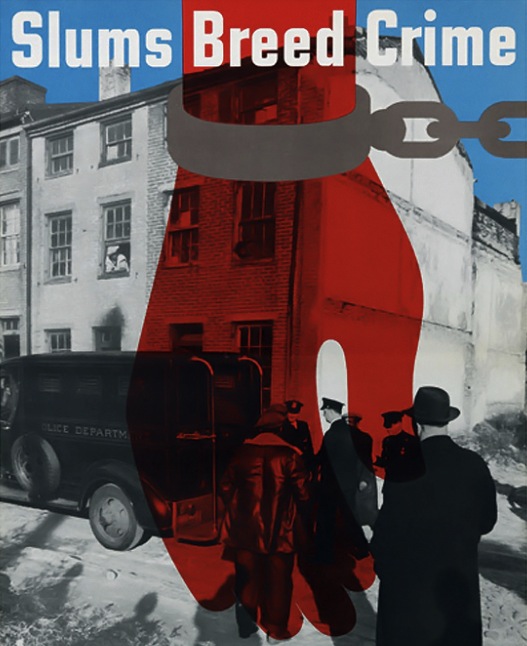
The city’s where the crime’s at, right? Think again. Nic Groombridge reflects about the growing role of rural criminology.
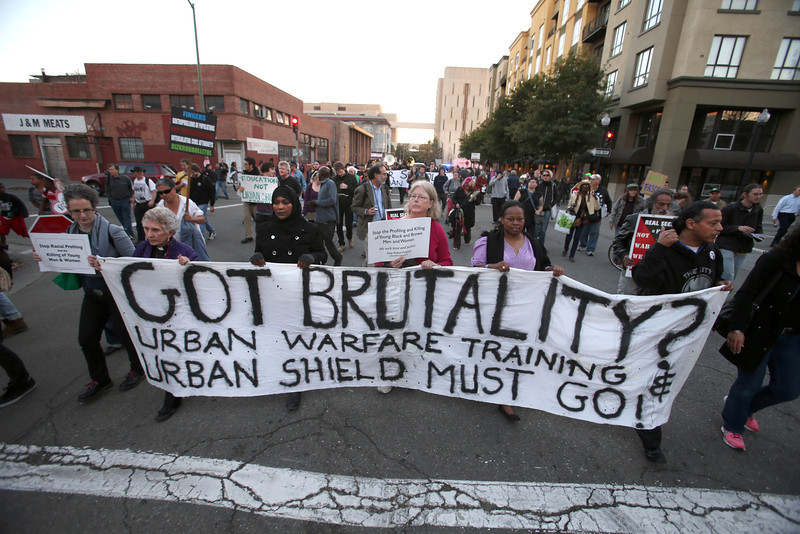
…just wait ’til you see the T-Shirts that were on sale at this year’s Urban Shield event.
“The claim that outside agitators had been the riot’s ringleaders…reiterated that black people were incapable of acting as political subjects in the defense of their humanity and rights as citizens,” writes Steven Gregory, professor of Anthropology and African American studies at Columbia University. Although applicable to the more recent Ferguson protests, Gregory’s words reference a series of similar events that occurred in 1930s Harlem. His recollection of several white-black, citizen-police fatalities exposes the need for not only institutional -but cultural- change.
Speaking of which, hopefully some of you were able to attend UC Berkeley’s forum, “Black lives matter: police violence, prisons and freedom visions” on September 19th. The event featured speakers such as CeCe McDonald, Julia Chinyere Oparah and Ashon Crawley.
What can anthropology contribute to discussions of race, state-condoned brutality and violence? Pem Davidson Buck reflects on this and other questions in her post for Anthropology News, The Violence of the Status Quo.
My award for most disturbing topic of the month goes to Shane Bauer’s coverage of the 2014 Urban Shield event that was held in Oakland, California. Every year members of police and SWAT teams attend the tradeshow, where the latest tactical gadgets (including things like armored vehicles, blindness inducing flashlights and canine mounted cameras) are unveiled. Wait ‘til you see pics of the T Shirts that were on sale at the event…
Coming in at a close second on the creepiness scale is Jaeah Lee’s post, “So Basically Everyone Killed by a Cop is a Criminal, According to the FBI” And yes, it truly is as bad as it sounds. The fact that the FBI –among other things- allows jurisdiction-by-jurisdiction variation in the definition of “felon” is among Lee’s most worrisome findings.
NPR’s Gregory Warner featured an opposing view of police brutality this month. A Kenyan officer charged with the fatal shooting of two men inspired a local protest…in his favor. Find out why this instance of police brutality was “warranted” in the minds of citizens in his jurisdiction.
Police brutality often brings images of Ferguson, militarization and white-black violence to mind. But what about the seldom-mentioned tactic of police seizure of funds from people not charged with a crime (and without a warrant)? An engaging three-part expose about the questionable search and seizure practice is featured in The Washington Post.
Phew, that was a lot of bad news. Now onto the good- the Anthropology of the Good to be precise. In the words of Professor Joel Robbins, “Consensus about what constitutes good and how we separate this from bad is hard to pin down.” Cheer yourself up by reading about Robbins’ research at the University of Cambridge as well as why an Anthropology of the Good is a necessary complement to the already prevalent Anthropology of Suffering.
Also bound to make you happy is AllegraLab’s call for editorial assistants! Find out if you qualify, then send an email to their team at stuff@allegralaboratory.net before September 30th.
Did I miss something? No worries- it does happen on occasion. If you have any suggestions for DragNet, or if you want to call attention to a specific blog or article, send an email to anthropoliteia@gmail.com with the words “DragNet” in the subject header and I’ll get on it!

Whether you rely on Twitter, Facebook, Washington Post or Reddit for updates, chances are your August feed has been dominated by discussions surrounding the death of Michael Brown.
Whether you rely on Twitter, Facebook, Washington Post or Reddit for updates, chances are your August feed has been dominated by discussions surrounding the death of Michael Brown. Matt Thompson of Savage Minds touched upon the conflicting coverage of recent events in Ferguson (as well as the implications highlighted by news entities like The Washington Post and New York Times) in his entry, “What is a rioter?” Likewise, the short (and terrifyingly poignant) comic featured in Medium’s August 14th post expands upon the reality of modern police militarization. Among other problems, it emphasizes the role of basic training (or lack thereof) in the police use of military-issued equipment.
If militarization is of particular interest, be sure to check out Taylor Wofford’s piece in Newsweek. Although many associate the growing police use of military grade gear and weaponry with Ferguson protests, Wofford details how departments have been “silently preparing officers for battle” as far back as the early ‘90s.
The Economist’s post Cops or Soldiers? is also relevant to concerns about police militarization. More intriguing is the fact that the article was originally featured back in March (preceding the events in Ferguson). Although SWAT teams are implied as representing an important tool of departments, when and where such teams should be deployed remain key (unanswered) questions.
Of course, Anthropoliteia staff have not been silent bystanders to Ferguson discussions. Meg Stalcup offered insight about the series of events, providing the seldom-addressed topic of officer perceptions. Although the dynamic of officer-civilian relations remains mostly hostile, Stalcup posits that with officer’s “under threat perception, it’s not surprising, although unprofessional and deplorable, that officers menace the protestors they are supposed to protect.” Lastly, don’t miss Anthropoliteia’s second Ferguson post Blue on black violence and original crime: view from Oakland, California. Our developing forum featured Brad Erickson on August 21st. In his post, Erickson uses his own experiences researching the people and police of Oakland, CA to comment on the racial and militaristic implications of Michael Brown’s shooting.
 Anthropoliteia