DragNet

DragNet August 1 – 24, 2014

Whether you rely on Twitter, Facebook, Washington Post or Reddit for updates, chances are your August feed has been dominated by discussions surrounding the death of Michael Brown.

Whether you rely on Twitter, Facebook, Washington Post or Reddit for updates, chances are your August feed has been dominated by discussions surrounding the death of Michael Brown.

Whether you rely on Twitter, Facebook, Washington Post or Reddit for updates, chances are your August feed has been dominated by discussions surrounding the death of Michael Brown. Matt Thompson of Savage Minds touched upon the conflicting coverage of recent events in Ferguson (as well as the implications highlighted by news entities like The Washington Post and New York Times) in his entry, “What is a rioter?” Likewise, the short (and terrifyingly poignant) comic featured in Medium’s August 14th post expands upon the reality of modern police militarization. Among other problems, it emphasizes the role of basic training (or lack thereof) in the police use of military-issued equipment.

If militarization is of particular interest, be sure to check out Taylor Wofford’s piece in Newsweek. Although many associate the growing police use of military grade gear and weaponry with Ferguson protests, Wofford details how departments have been “silently preparing officers for battle” as far back as the early ‘90s.

The Economist’s post Cops or Soldiers? is also relevant to concerns about police militarization. More intriguing is the fact that the article was originally featured back in March (preceding the events in Ferguson). Although SWAT teams are implied as representing an important tool of departments, when and where such teams should be deployed remain key (unanswered) questions.

Of course, Anthropoliteia staff have not been silent bystanders to Ferguson discussions. Meg Stalcup offered insight about the series of events, providing the seldom-addressed topic of officer perceptions. Although the dynamic of officer-civilian relations remains mostly hostile, Stalcup posits that with officer’s “under threat perception, it’s not surprising, although unprofessional and deplorable, that officers menace the protestors they are supposed to protect.” Lastly, don’t miss Anthropoliteia’s second Ferguson post Blue on black violence and original crime: view from Oakland, California. Our developing forum featured Brad Erickson on August 21st. In his post, Erickson uses his own experiences researching the people and police of Oakland, CA to comment on the racial and militaristic implications of Michael Brown’s shooting.

Standard
DragNet

DragNet: June 15 – 30, 2014

lancaster-pa-camera

After months of debate, the ACLU released previously sealed records regarding the cell phone-tracking tool in use by several departments.


The topic of surveillance packed a powerful punch this month, with the court releasing documents regarding Stingray technology capabilities. After months of debate, the ACLU released previously sealed records regarding the cell phone-tracking tool in use by several departments. The publication comes nearly 3 months after initial buzz about the tool that circulated after a suspect’s phone was used by police to track him to his apartment prior to obtaining a warrant. The more notable specifics of the technology can be found here.

The problem of prison over crowding is presented by Alyse Berenthal’s article in Anthropology News this month. As an anthropologist interested in the ethnographic aspects of justice, Berenthal spent time working with people in self-help legal clinics. By restricting definitions of justice to the individual level, Alyse work offers insights to the pitfalls of an over burdened justice system.

The truth is in the data.   The proof is in the series of graphs presented by Nicole Flatlow in Think Progress’ article about the existential growth of the US prison population. States like California are so over-populated with prisoners that courts have ordered that prisons take steps to reduce inmate populations. Local jails are feeling the pain of overcrowding, with large volumes of low-risk or offenders awaiting trial making up a large proportion of total prisoner populations.

Also in surveillance is Kirsten Weld’s post about the institutionalization of intelligence gathering by the US. From the Spanish-American War, to FDR’s administration, to the aftermath of 9/11: it becomes apparent that data mining is nothing new to the US’ administrative history. Whether or not the US has a right to act as “global policeman” has yet to be determined by both the law and its citizens.

Stingray technology was not the only cause of raised eyebrows this month. James Eyers of Financial Review put tap-and-go credit card technology under scrutiny in a post from earlier this month. Some departments are criticizing tap and go transactions; pointing to higher theft and break-ins by criminals looking for this specific type of credit card. Banks are standing by their anti-identification policies, stating that crime inevitably changes alongside technological innovations and they as a financial entity cannot be held accountable.

First shared in May, Mother Jones’ post by Katie Quandt was popular again this month. Entitled “What it’s like to visit your mother in prison on mother’s day”, Quandt reflects about the impact of her foster sister’s incarceration on her role as a mother. The article comes shortly after Sesame Street’s recent initiative to talk about challenges children with parents in prison face, citing that 1 in 28 children fall into this category (with that stat increasing to 1 in 9 children among African American children).

Have plans to lounge beachside this summer? If so, you can’t miss David Thompson’s “must read” journal articles for Spring 2014. Catch up on the latest in anthropology and policing in scholarly publications here.

Border Criminologies announced their recent initiative to first digitize and eventually physically document material works by UK immigrants. The archive is intended to act as a reminder of the creative process of individuals even during times of extreme stress and uncertainty. It serves to emphasize the role of material culture in criminology.

Should community policing lead the way in 2014? Steve Early advocates for this approach in In These Times pose on June 23rd. He attributes the more “reactive policing” approaches to post-9/11 emphasis on response. Would regular officer assignments result in higher reliability ratings from the public? Should community relationship building be instated to replace reactive responses?

Standard
DragNet

DragNet: June 1 – 15, 2014

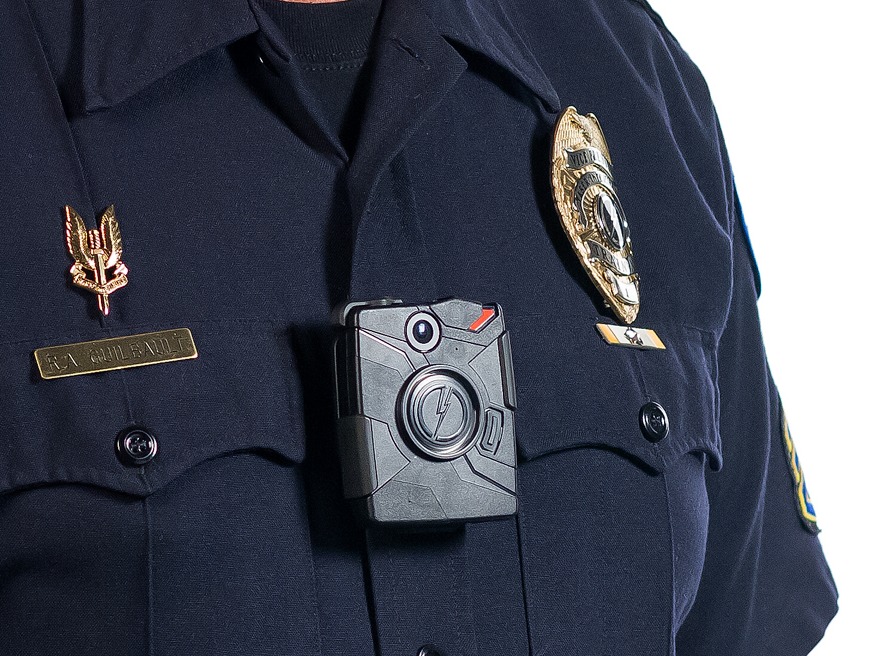
"The challenge of on-officer cameras is the tension between their potential to invade privacy and their strong benefit in promoting police accountability," ~ACLU

“The challenge of on-officer cameras is the tension between their potential to invade privacy and their strong benefit in promoting police accountability,” ~ACLU

June kicked off with a post by Scott Shafer of NPRNews regarding the drastic increase in California parole rates. Where previous years saw less than a 10% release rate for “lifers”, 2013 recorded a near doubling of this statistic. California governor Jerry Brown has reiterated that crime type is no longer as much of a determining factor for parole as is the level of threat an inmate poses to the community.  For more about the parole increase, check out Matt Levin’s article about lifers freed from prisons as well as his timeline cataloging the history of California parole trends.

“To the radicalized youth who demonstrated in 14 Brazilian state capitals on May 15, the World Cup represents a fundamental flaw in the Workers’ Party (PT) project,” writes Rodrigo Nunes in a news post from Aljazeera. While your friends are busy blowing up your Facebook feed about the soccer of World Cup, Brazilians continue to show outrage that the event has brought their country few winners, but many losers. For more about the political implications of the World Cup, check out Werner Krauss’ article on the Huffington Post.  Here, he dissects the event from a structural-ritual perspective. Anthropoliteia also featured a post from Meg Stalcup in our continuing coverage of the World Cup.

It’s not just police getting virtual these days- so are crime scenes. In a personal favorite post by Kashmir Hill of Forbes, Hill recounts the Internet trail left behind by Santa Barbara Shooter Elliot Rodger. The troubled youth produced several YouTube videos documenting his gradual decline into criminal violence.

What would Jeremy Bentham and Michel Foucault have to say about Lebanese prison systems? Yazan al-Saadi’s post on Al-Akhbar evokes this and other questions about surveillance and control. The original panopticon envisioned a top-down power structure wielded by authority figures over non-authority figures.  In the context of Lebanese prisons, however, this concept is turned on its head as it is the prisoner who seemingly wields ultimate control.  Also in surveillance, the wife of ex-IRA prisoner Anthony McIntyre has requested a formal investigation by the US state department after sensitive information from a phone call with the US embassy appeared in a popular tabloid a few days later.

An unlikely economical analysis of police body mounted cameras appeared in The Motley Fool’s investing section.  Ryan Lowery reflects on the potential profitability of the leading police tech companies (including TASER and L-3 Communications) that produce the majority of the equipment.

Issues of excessive force, surveillance and militarization come to a head in Kent Paterson’s post on CounterPunch. Using recent examples of militaristic responses by members of the Albuquerque police department, Paterson builds up to a broader discussion about the impact of police technologies on aggressive responses and use of force by US police departments.

Juvenile detention centers in California will be receiving $80 billion in coming months to rejuvenate current facilities. Several proposals for amenities and new features reinforce a community-based emphasis.  Officials hope the restructuring will help to solidify rehabilitation as a prevailing theme.

Tina Dupuy authored an engaging piece about casual vs. institutionalized racism in AlterNet this month. Why does the US rally more readily against casual comments than it does to institutionalized forms of racism (such as the prison system)? And further, does/can one form of racism lead to the other?

“Ban them, ban them all with a carve out for hunting weapons,” says Scott Martelle from LA Times Opinion. Referring to his admittedly minority stance on gun control in America, Martelle proposes the next steps for eliminating gun violence in America.

Standard
DragNet

DragNet, April 2014

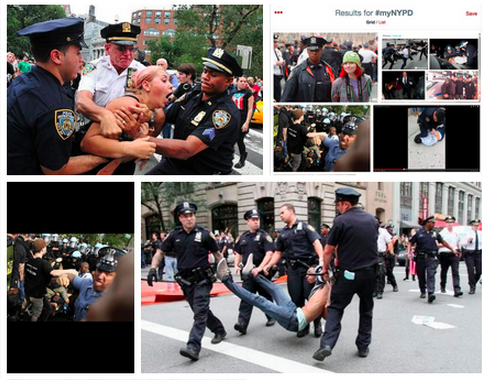
#myNYPD

What was on April’s Blog Menu, you ask? A flurry of posts covering everything from issues in ethnicity, crime stat validity, police social media involvement and ongoing Ukraine and surveillance coverage, of course! Continue reading

Standard
Dossiers

Ethnic Profiling as a Societal Institution in the Netherlands

The editors of Anthropoliteia would like to welcome this special “Dossier” from our own Paul Mutsaers

Psychologism and profiling ‘the other’

It is common knowledge in the sociology of police that law enforcers do not merely apply legal maxims but ‘employ discretion in invoking the law’, as Egon Bittner already put it in 1970 in The Functions of the Police in Modern Society. There is often not much consistency in the application of the law as beat officers have a large leeway when they operate in the blind spot of their desk superiors, that is, on the street. While on the beat, policing may be turned into a mechanism of social ordering that has the potential to significantly alter the life prospects of those who are encountered. When roaming in the districts, containing a demonstration, responding to an emergency call, mediating a conflict, investigating a homicide, or containing a riot, the police are actually (re)producing social hierarchies and differences in the settings in which they operate. Continue reading

Standard
Blotter

Police speak out against racial profiling in Lake County, California

Mad props to fellow Anthropolitician Brian Lande (socdeputy to ya’ll) who, along with some former colleagues of the Lake County Sheriff’s Department, spoke out on KGO-TV (that’s ABC channel 7, to y’all in the Bay Area) against the systematic racial profiling practices that have become part of the department’s habitus

You can see the full video after the break

Continue reading

Standard
Blotter

Obama Tries to Defuse Gates Controversy

A series of articles and reports have come out today based on Obama trying to diffuse the Gates controversy: See NPR’s story by clicking here. Also listen to Sgt. Crowley tell his side of the story,  Sgt. Who Arrested Gates Tells His Story. Also listen to one of my favorite civil rights attorney’s, John Burris, discuss race and policing with two police chiefs. Burris has prosecuted  many police officers for misconduct and civil rights violations. He is notable for his involvement in the Oakland Rider’s scandal (a group of corrupt OPD officers) and was co-counsel in the Rodney King trial. Listen to “Black and Blue: Police and Minorities” from NPR’s Talk of the Nation.

One of Burris’s points is that police officers come to a call with expectations framed by the information that dispatchers give them. In part this is because officers also form stereotypical expectations about situations they go to, e.g. B&Es. Burris also makes the point that I have made, which is that respect is a major issue of urban policing especially between male cops (black or white) and black men contacted by the police. Burris recommends what cops call “verbal judo” which is just a “tactical” name for respectful communication. This is becoming a very popular style of discourse in law enforcement and is now part of the police academy curriculum training and is available as free training through the Learning Portal at the  California Peace Officer’s Standards and Training Commission.

Portland Or, Police Chief Rosie Sizer, also gives a very cogent explanation of how and why cops handle angry people the way they do when they respond to a scene. She  addresses why new specific policies for dealing with “angry people in their own home” is not practical and the importance of training doctrine and officer maturity for preparing officers for the vagaries of police experiences. Sizer describes Portland PDs in-service training for dealing with “jerks” on the force. Some officers, she said, are “jerks” all the time, but minorities perceive that officers rudeness as racially motivated.

Standard
Blotter

Gates Arrest Updates

Sgt. Crowley refuses to apologize to Gates:

http://www.thegrio.com/2009/07/cop-defends-his-actions-in-gates-arrest.php

Dr. Boyce Watkins: “Consider this before crying ‘racial profiling.’

http://www.thegrio.com/2009/07/i-am-not-al-sharpton.php

Sgt. Crowley taught courses on how to prevent racial profiling:

http://www.thegrio.com/2009/07/officer-who-arrested-gates-is-profiling-expert.php

A less than scholarly comment:

I am very disappointed  by President Obama’s claim that the Cambridge PD’s actions were “stupid.”. Obama, himself, said that he was unaware of all the facts of the case. The bottom line is that Sgt. Crowley is getting publicly hung out to dry for doing his job. There is no evidence that he is “stupid.” Gates is able to leverage his status and reputation  in a way that is preventing any real debate about what happened or any logical or sensible discussion of racial profiling. This is one of the most inane debates about race and police that I have seen in years. People with power will listen to Gates, who will listen to Sgt. Crowley?  Will Crowley be judged only in the court of public opinion or will any real investigation be conducted to determine if his actions were inappropriate?

I disagree with how he handled his call, but hindsight is alway 20/20. Hindsight, as anyone who has actually had to testify in court knows, is not the standard by which a persons actions are judged. No one has asked Crowley why he did what he did at the time. Further, Crowley’s own past actions seem to indicate that he is not a racist. He has taught courses at the police academy for approximately five years on how to prevent racial profiling. He has rendered first aid to save the life of an African American in 1993 (albeit a famous athlete). The fact that I would not have handled Gates’ outbursts the way Crowley did does not mean that he did anything outside the bounds of the law.

Being an officer is tough emotional work. Day in and day it is spent with people who lie to you, disrespect you, call you names, and frequently try to hurt you. Through it all, officers are expected to take their ego bruising and be the bigger man. But officers are human beings too and sometimes a citizen or suspect crosses the line and an officer reacts in a way that is less than ideal. It happens but does not equate to racial profiling.

What saddens me the most is that Gates is using the term “rogue policeman” for Crowley. I have seen rogue cops in action, and reported them. They don’t act like Crowley. Rogue cops engage in a systematic pattern of misconduct in which illegal searches and seizures are conducted, state laws and departmental policies are regularly violated, and other officers and the public are put in harms way. Thus far there is no evidence that Sgt. Crowley is that kind of officer.

Standard