Black Lives Matter Syllabus Project

The Anthropoliteia #BlackLivesMatterSyllabus Project, Week 4: Gina Athena Ulysse on “Race: The Power of an Illusion”

The editors of Anthropoliteia are happy to present the latest entry in on ongoing series The Anthropoliteia #BlackLivesMatterSyllabus Project, which will mobilize anthropological work as a pedagogical exercise addressing the confluence of race, policing and justice.  You can see a growing bibliography of resources via our Mendeley feed.   In this entry, Gina Athens Ulysse discusses the film series “Race: The Power of an Illusion.”


Continue reading

Standard
Black Lives Matter Syllabus Project

The Anthropoliteia #BlackLivesMatterSyllabus Project, Week 3: Amrita Ibrahim on The People and the Police

The editors of Anthropoliteia are happy to present the latest entry in on ongoing series The Anthropoliteia #BlackLivesMatterSyllabus Project, which will mobilize anthropological work as a pedagogical exercise addressing the confluence of race, policing and justice.  You can see a growing bibliography of resources via our Mendeley feed.   In this entry, Amrita Ibrahim discusses the film, “The People and the Police”.
  

Continue reading

Standard
Black Lives Matter Syllabus Project

The Anthropoliteia #BlackLivesMatterSyllabus, Week 2: Elizabeth Chin on bell hooks (and Sidney Mintz, Voltaire, and Kara Walker)

The editors of Anthropoliteia are happy to present the latest entry in on ongoing series The Anthropoliteia #BlackLivesMatterSyllabus Project, which will mobilize anthropological work as a pedagogical exercise addressing the confluence of race, policing and justice.  You can see a growing bibliography of resources via our Mendeley feed.  In this entry, Elizabeth Chin discusses bell hook’s “The Oppositional Gaze.”
 

Continue reading

Standard
Black Lives Matter Syllabus Project

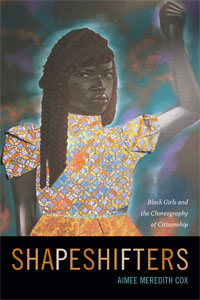
The Anthropoliteia #BlackLivesMatterSyllabus, Week 1: Sameena Mulla on Aimee Meredith Cox’s Shapeshifters

978-0-8223-5931-9_prThe editors of Anthropoliteia are happy to present the latest entry in on ongoing series The Anthropoliteia #BlackLivesMatterSyllabus Project, which will mobilize anthropological work as a pedagogical exercise addressing the confluence of race, policing and justice.  You can see a growing bibliography of resources via our Mendeley feed.  In this entry, Sameena Mulla discusses Aimee Meredith Cox’s Shapeshifters: Black Girls and the Choreography of Citizenship.

Continue reading

Standard
Black Lives Matter Syllabus Project

Introducing: The Anthropoliteia #BlackLivesMatterSyllabus Project

1920px-1_year_commemoration_of_the_murder_of_michael_brown2c_the_ferguson_rebellion2c_26_the_black_lives_matter_uprising-_282042628532229
The editors of Anthropoliteia would like to welcome Dr. Sameena Mulla to introduce our newest project, The Black Lives Matter Syllabus Project, which will mobilize anthropological work as a pedagogical exercise addressing the confluence of race, policing and justice.

Continue reading

Standard
#Ferguson & Elsewhere, Pedagogy

Anthropoliteia reacts to #Ferguson

It’s hard to know what exactly to say, to think, to feel or how to react at a time like this; even as a scholar of police.  Which is not to say that everything in the case is terribly ambiguous.  Quite the opposite: another young black man has been the victim of a deadly and unaccountable state violence in front of our very eyes.  I suppose the disorientation lay in how to move forward, and for that I have no strong answers.

Embed from Getty Images

Having said that, several of us at Anthropolitiea have been active on Twitter, I imagine in an effort to make sense of exactly that existential question. This is not dissimilar to my own reaction during and after the Trayvon Martin/George Zimmerman affair.  Below are some of our thoughts, as we form them:

Continue reading

Standard
Pedagogy

Police Accountability Theory

I’ve been helping out with some “applied criminology” courses at the University of Cambridge being run out of the Institute of Criminology there, and the majority of students are UK police officers.  Next term, some of them will write an essay that aims to answer the following question:

“You are the chief constable of an agency that has been criticized over poor accountability because officers policing a demonstration concealed their name tags. Select a criminological theory relevant to this phenomenon, then design an evidence-based strategy for improving accountability in light of that theory. Describe the research methods you would use to evaluate the effectiveness of the strategy, and the leadership plan for carrying the entire effort forward.”

I am putting together a “core reading list” for persons who choose this essay question, and wondering if anyone has suggestions for “recommended readings” regarding theories of police accountability.  Of course, the question specifically mentions “criminological theory”–but up to now, I have only found a few things in the “usual suspects” type criminology/police readers (i.e., “Policing: Key Readings” and “Handbook of Policing” edited by Tim Newburn).  So anything is welcome.  If you have ideas for the “research methods” part of the question, by all means share them please; but I’m mostly concerned about the theory part.  Good ethnographic pieces are also welcome.

Standard
Pedagogy

Resolved: Culture is the Center of the Anthropology of Policing

This is the second entry in my series of posts on the question: “What is the curriculum for the anthropology of policing?” As promised, in this post I will share a syllabus I taught last semester, and follow Kevin’s lead in using critical reflection on my teaching experience as a way to think about the challenges of “canon formation” for the anthropology of policing. Before I do this, however, I should put all my cards on the table and say that I am beginning from a particular assumption about the anthropology of policing. My ‘original position’ (apologies to Rawls) is this: (a) the disciplinary core of anthropology is its concern with culture and, therefore, (b) the integrating core of the anthropology of policing is an anthropological concern with culture. Based on this assumption, I expect the answer to the question of my previous post (i.e. overlap in the syllabi for three hypothetical courses on the anthropology of policing pitched to the distinct audiences of (i) practitioners, (ii) undergraduate liberal arts majors, and (iii) anthropology graduate students) to be “Yes.” And not just “Yes,” but “Yes, there is an overlap. And it consists of a particular literature about the culture of policing.”

So, the ultimate purpose of this exercise in public auto-critique is to rise to the challenge of converting the vague prejudices of an American-cultural-anthropologist into a bibliography of canonical ideas about the culture of policing. The job will be finished when we have assembled a bibliography robust enough to answer critiques registered on behalf of any of the three audiences listed above. And if, at the end of this ordeal, my culturalist prejudices have not been crushed under the jackboot of political economy, or scattered to the winds of the policy community, then I will call myself a winner and buy everyone a drink at the November AAAs.

So, on to the syllabus. It is for a course I taught last semester, called Policing: An International Perspective, as an elective in the University of Hong Kong’s masters program in criminology. This is a popular two-year coursework-based degree “designed as a professional qualification for practitioners in criminal justice and related fields (including NGOs), [but also] open for people with an interest in the field of criminology in general.” The program is housed within a sociology department that awards PHDs in sociology, anthropology and criminology. Thus the experience of working here has thus brought me into contact with all three audiences mentioned above. The course itself enrolled 18 students, about half of whom were serving in what is locally known as the “disciplined forces.” I designed the course before I came to Hong Kong, however. And the lack of a practical familiarity with my audience gave a rather free rein to my personal sense of the how the anthropology of policing fit together as a coherent topic of instruction.

So, without further ado, for your apprasial and critique, here is the syllabus.

Where do you think its grand intellectual vision crumbled most dramatically in its confrontation with the realities of the classroom?

Standard