Commentary & Forums, Security in Brazil: World Cup 2014 and Beyond

The Politics of Violence and Brazil’s World Cup

The editors of Anthropoliteia welcome Sean T. Mitchell with the latest entry in our forum Security in Brazil: World Cup 2014 and Beyond.

A June 19, 2014 São Paulo protest called by the Movimento Passe Livre (Free Fare Movement) to protest transport fares and conditions, but mischaracterized internationally as an “Antigovernment” and “World Cup” protest. The banner in front reads, “There will be no fare.” Photo. Oliver Kornblihtt/ Midia NINJA

A June 19, 2014 São Paulo protest called by the Movimento Passe Livre (Free Fare Movement) to protest transport fares and conditions was mischaracterized internationally as an “Antigovernment” and “World Cup” protest. The banner in front reads, “There will be no fare.” Photo: Oliver Kornblihtt/ Midia NINJA


On Failure, Violence, and the World Cup

Not unlike the 2010 hoopla anticipating that year’s South Africa World Cup, the breathless expectation of failure and security breakdown that characterized much international coverage of the lead up to Brazil’s 2014 World Cup, now, midway through the month-long event, seems to have been illfounded.

When reporting wasn’t merely what Meg Stalcup characterized on this forum as fluff—which much of it was—pre World Cup coverage in the global north press was overheated and macabre.  Why?

The last year has seen the emergence of large scale Brazilian protest movements of clear importance, and the World Cup has been a target of their criticism.  But the macabre emphasis on violence and failure has obscured much more than it has illuminated about these movements, and about the real violence and social conflicts in contemporary Brazil.

To understand why so much coverage has taken this lurid form, it helps to look at historical representations of peace and violence in Brazil, as well as contemporary politics in Brazil and abroad.

Continue reading

Standard
Commentary & Forums, Dispatches, From the Field, Security in Brazil: World Cup 2014 and Beyond

The Other Side of the Bay – Social Consequences Across from Rio de Janeiro

The editors of Anthropoliteia welcome Nick Wong and Stuart Davis with the latest entry in our forum Security in Brazil: World Cup 2014 and Beyond.
Photo by Nick Wong CC BY-NC-SA 4.0

A young boy playing in Fazenda dos Mineiros. Many of the toys provided to the children are donations from church organizations and other social programs aimed at helping these communities. They are insured to be in good working condition before donation, but due to the large demand for toys, children remain with the same toy for years. Photo by Nick Wong CC BY-NC-SA 4.0

Our first contact with the Fazenda dos Mineiros community was by chance encounter. We were invited to visit the home of a friend, Gilberto Lima, a community leader who works in Rio de Janeiro and São Gonçalo on children’s rights, among other issues of social justice. Gilberto was the uncle of a friend back in the US who helped one of us prepare for our respective Fulbright terms, and for hospitality’s sake, he invited us over for lunch. What we didn’t know was how much the visit would influence our nine months in Brazil.

Located 15 miles across the Guanabara Bay from Rio de Janeiro’s historic downtown, the city of São Gonçalo has followed a much different path than its famous neighbor.[1] Continue reading

Standard
Commentary & Forums, Security in Brazil: World Cup 2014 and Beyond

A Conflicted Brazil on the Eve of the World Cup

The editors of Anthropoliteia welcome Meg Stalcup with the latest entry in our forum, Security in Brazil: World Cup 2014 and Beyond.
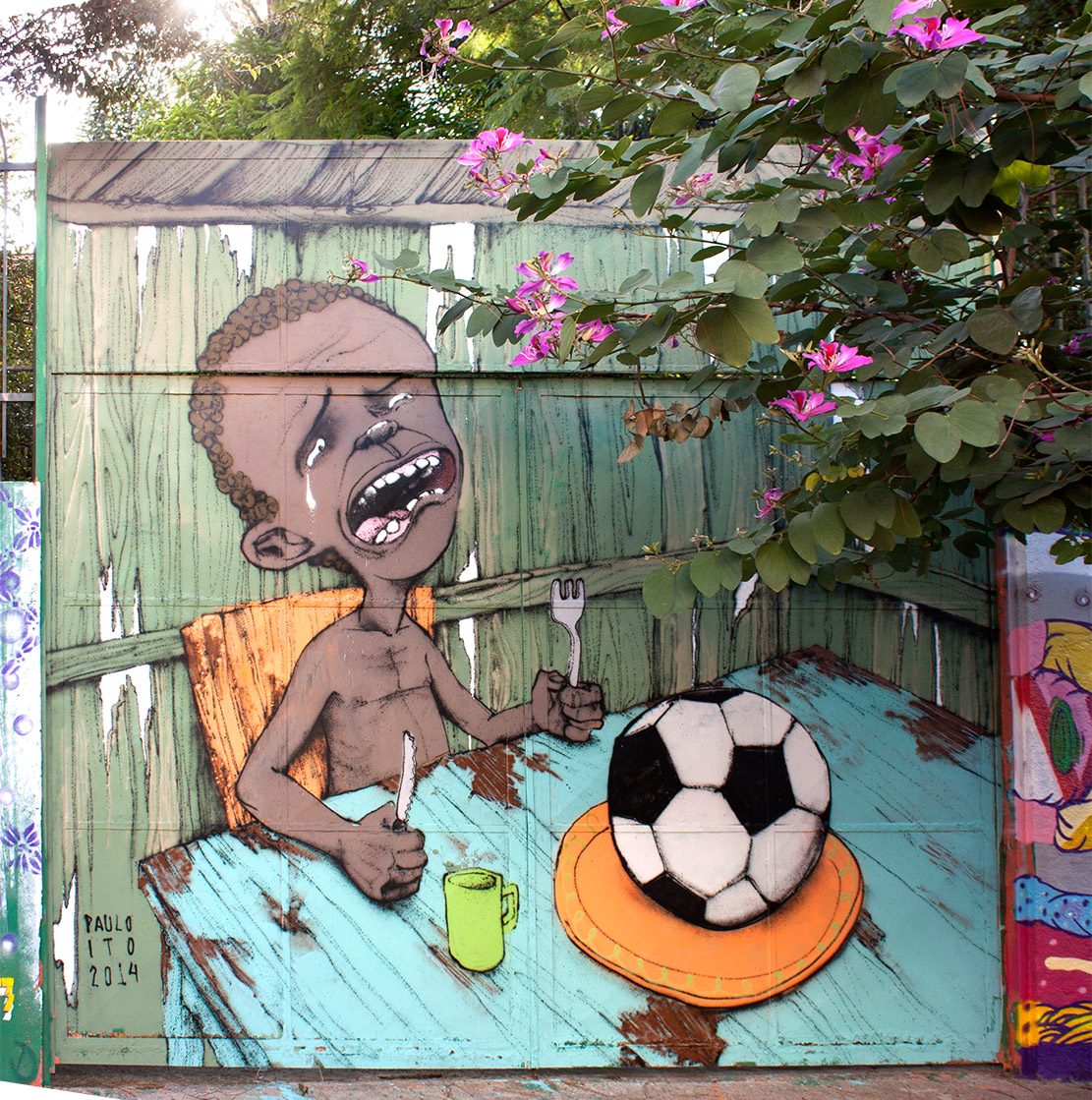
“evento da pompéia 2014.” Paulo Ito. Courtesy of the artist CC BY-NC-ND 2.0

“evento da pompéia 2014.” Paulo Ito. Courtesy of the artist CC BY-NC-ND 2.0

News and social media around the world are carrying stories about the tear-gassed transportation strikers in São Paulo, violence and conflict with the police in Rio’s favelas, and – witty but no less serious – John Oliver’s scathing explanation of the problems with the Fédération Internationale de Football Association (FIFA), which drew on major media reports about the organization’s well-known illegal cash-for-contracts corruption, and also its scandalously legal pillaging of World Cup host countries.

For those who have been following the preparations for the World Cup in international reporting, or this forum, strikes, protests and corruption are no surprise. Continue reading

Standard
Commentary & Forums, Security in Brazil: World Cup 2014 and Beyond

Rio de Janeiro’s BOPE and Police Pacification: Fear and Intimidation in Complexo da Maré

The editors of Anthropoliteia would like to welcome Nicholas Barnes with the latest entry in our developing forum, Security in Brazil: World Cup 2014 and Beyond.
Photo: Deco Cabral (published with permission of the photographer)

Photo: Deco Cabral (published with permission of the author)

The scene was impeccably staged. The Special Operations Police Battalion (commonly referred to as BOPE and famously depicted in the film Elite Squad and its sequel) had set up a temporary command center on the edge of the plaza. More than a hundred of their police, armed to the teeth, with bulletproof vests and helmets, were milling around in the sweltering heat with nothing to do after taking control of the area without a shot being fired. Sky, the television company, had set up a small table under an umbrella and was hoping to sign up residents for their cable package. A helicopter made low passes over the plaza. City sanitation workers pushed around piles of garbage, pretending to work. In the midst of all of this, BOPE police were giving rides to kids on several horses as dozens of journalists snapped photos of the delighted children. Later in the afternoon, BOPE raised their flag alongside the Brazilian national flag in the middle of the plaza. With much pomp and circumstance, Complexo da Maré, the largest group of favelas in Rio de Janeiro, had officially begun the pacification process.[1]

Located in the sprawling, industrial northern zone of the city, Complexo da Maré is a cluster of 16 favelas with a population of roughly 130,000. It is a public security concern because it is home to several non-state armed actors (two separate gang factions and a militia) and is located at the intersection of three of the major traffic arteries that connect the international airport to the rest of the city. I have been residing in Maré for the past year conducting dissertation field research. This has allowed me the opportunity to witness BOPE operations first hand and interview residents and community leaders about the tenuous and shifting public security situation. I will argue that BOPE’s pattern of abusive tactics and violence comprised an overall strategy to threaten and terrorize these communities into submission in an effort to “retake” these favela territories. And while such a strategy may have produced more effective tactical operations and short-term results, it is counter-productive to the pacification process in the long run and requires a major reassessment by the public security apparatus moving forward. Continue reading

Standard
Security in Brazil: World Cup 2014 and Beyond

Pacifying Rio’s Favelas: innovation, adaptation or continuity?

Photo: SEASDH - Secretaria de Assistência Social e Direitos Humanos, Rio de Janeiro

Photo: SEASDH – Secretaria de Assistência Social e Direitos Humanos, Rio de Janeiro

The editors of Anthropoliteia would like to welcome Ben Penglase with the latest entry in our developing forum, Security in Brazil: World Cup 2014 and Beyond.

Brazil’s favela “pacification” policy, implemented by the state government of Rio de Janeiro beginning in 2008, is the most recent example of efforts by the Brazilian authorities to produce security. Coming before Brazil hosts the 2014 World Cup this June, and before Rio hosts the Olympics in 2016, and tackling that most visible and now internationally-renowned symbol of urban chaos – the city’s hillside favelas – the policy has attracted widespread attention. The Rio authorities have lost no opportunity to dramatize the supposed “take-over” of favelas by the army and police – often planting the Brazilian flag in neighborhoods “rescued” from drug traffickers – and the UPP (Unidade de Polícia Pacificadora, or Police Pacifying Unit) policy has become symbolic of a wider attempt by Brazilian authorities to create a safe urban landscape. Yet events in the past two years have called the UPP’s success into question. Shoot-outs between drug-dealers and police in several favelas where UPP units are in place, and a massive protest by residents of the favelas of Pavão-Pavãozinho and Cantagalo after the suspicious death of Douglas “DG” Pereira, have brought media attention to those who question the policy’s effectiveness.

In the midst of all this visibility and scrutiny of the UPP policy, several fundamental assumptions about the “pacification” policy often go unexamined. Drawing upon my own history of observing changes and continuities in policing in Brazil, and especially in Rio, for over twenty years, I would like to problematize these guiding assumptions which have often framed depictions of the pacification policy by both the media and Rio’s policy-makers. Continue reading

Standard
What's going on in Ukraine?

Former Anthropoliteia contributor, and member of our Ukraine Roundtable, Michael Bobick has a new piece published over at the Council for European StudiesReviews & Critical Commentary site.  Here’s a taste:

On April 6th, pro-Russian protestors stormed and occupied the Donetsk Oblast Regional Administrative building, along with the local SBU (Ukrainians security services) headquarters. Overnight, barricades of tires, barbed wire, and professionally produced banners were hoisted over this building; the Ukrainian flag was replaced with a Russian one. On April 7th, the People’s Republic of Donetsk declared its independence and immediately appealed to President Putin to send Russian ‘peacekeepers’. A referendum on whether Donetsk ‘should join the Russian Federation’ was to occur sometime before May 11th, 2014. Similar events have occurred in the southern and eastern parts of Ukraine, in Lugansk, Kharkiv, Dnepropetrovsk, Zaporizhia, Kherson, Mykolaiv, and Odessa, regions referred to both in Western and Russian media as Russian or Russian-speaking. Though this conflation of language, identity, and ethnicity is far removed from the reality of everyday life in Ukraine, it remains an essential concept for understanding how separatism occurs in the former Soviet Union. Each can become a pretext for discrimination, marginalization, and threat at the hands of the de jure state that can only be remedied by Russian intervention.

In this article, I seek to answer three questions: Who are the separatist forces currently operating in Ukraine, and what is their goal? Secondly, what can Transnistria, a de facto state in Moldova that has existed for more than two decades, offer to an understanding of events in Ukraine? Finally, I am interested in how the new political technologies and practices deployed by Russia in Ukraine are changing the nature of war and humanitarian intervention in the twenty-first century.

via Active Measures: Separatism and Self-Determination in Russia’s Near Abroad | Reviews & Critical Commentary.

Link
Security in Brazil: World Cup 2014 and Beyond

Security in Brazil: World Cup 2014 and Beyond

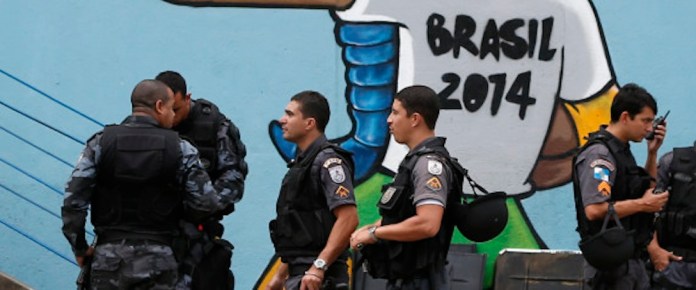
Riot police gather in front of a mural of the mascot for the 2014 World Cup soccer tournament, called Fuleco, near the Maracana stadium ahead of the Confederations Cup soccer final between Brazil and Spain in Rio de Janeiro, Brazil, Sunday, June 30, 2013. (Source: AP Photo/Victor R. Caivano)

Riot police gather in front of a mural of the mascot for the 2014 World Cup soccer tournament, called Fuleco, near the Maracanã stadium ahead of the Confederations Cup soccer final between Brazil and Spain in Rio de Janeiro, Brazil, Sunday, June 30, 2013. (Source: AP Photo/Victor R. Caivano)

The Editors of Anthropoliteia would like to welcome Stephanie Savell as guest editor of an invited developing Forum on Security in Brazil: World Cup 2014 and Beyond

The media is full of stories about Brazil, particularly stories of urban violence, protest, and police repression. Many news stories make the link to the upcoming June 2014 World Cup and the 2016 Olympics in Rio de Janeiro, wondering more or less explicitly whether such violence will affect the games and visitors to Brazil. Brazilian activists and citizens have been protesting the massive spending on infrastructure and highly visible public security measures being taken in preparation for the global games, asking, among other things, “What happens in 2017?”

In Rio de Janeiro, much controversy revolves around the flagship program known as “pacification,” in which state security forces wrest territorial control of favelas from drug gangs and install police posts in these informal settlements. I just spent the past year living in the “pacified” Complexo do Alemão, a sprawling favela notorious for its crime-related street violence. Here residents perceive an ongoing battle for control between police and the still present but now slightly more covert gangs, and many believe the gangs are gaining ground. In recent months, escalating violence has many in Rio wondering whether the pacification program will collapse.

From an anthropological viewpoint, the significance of how security in urban Brazil has been developing reaches far beyond what the media portrays as preparation for the games. Current trends must be understood in the context of a history of both repressive policing and alternative community policing programs in Brazil. There are pressing questions to be asked about the deployment of the military in urban neighborhoods and the use of private security firms and personnel to fill gaps in state capacity. Additionally, there are multiple dimensions of a broader understanding of the term “security” that are obscured by the focus on public security in the context of the forthcoming global sporting events. For example, many Brazilians protest the economic and social costs of hosting the games, at a time when the government fails to meet the basic needs of citizens, and as many favela residents are displaced by infrastructure projects and real estate interests. Unemployment, racism, gender disparities, suppression of popular uprisings, lack of freedom of the press, environmental precariousness, and the enforcement of state regulations in informal settlements are just a few of the insecurities at stake in pre- and post-World Cup security practices.

Anthropologists like myself, and ethnographers in other disciplines, have in recent years been investigating ever more closely how security is experienced, understood, and contested in the everyday lives of urban Brazilians. Through historical and ethnographic fieldwork, such analyses seek to characterize the forms of governance through which security emerges. In a timely discussion leading up to the June 2014 World Cup, several of us will take the opportunity to share posts as part of a special invited forum on Anthropoliteia to discuss and reflect on some of the issues of the contemporary security moment in Brazil and shed light on what takes place behind the news.

Standard
What's going on in Ukraine?

Police violence and ideas of the state in Ukrainian ‘Euromaidan’

The editors of Anthropoliteia would like to welcome Taras Fedirko with the latest entry in our developing Forum What’s Going on in Ukraine?

Violence as other; other as the authorities

In their responses to police violence during the ‘Euromaidan’in Ukraine, protesters and engaged commentators often located the source of brutality in some sort of unofficial, ‘other’realm within the state. Narratives of police brutality became narratives of the state as the riot police came to be imagined as commanded directly by the president Yanuokovych; authorities were thought to conspire against the Maidan; and snipers shooting at protesters on February 18-20 were said to be ‘Russian-trained.’

My interest here is in how protesters and sympathetic media represented the standoff between Maidan and ‘Berkut’ riot police not so much in terms of the enforcement of public order or contestations over what such order is/should be, but in terms of a confrontation between protesters and the authorities (rather than the police). The term for the ‘authorities’in Ukrainian is vlada, which simultaneously means abstract ‘power’and ‘people in/holding power’. Although it has an official usage (e.g. orhany vlady—state institutions, literally ‘organs of power’), it is crucial that in Ukrainian there is no word for ‘authority’and, I would add, no pragmatic difference between power and authority. The ‘realist’term vlada therefore maps the lack of emic differentiation between the official and unofficial power. I suggest that the displacement of the source of police agency to vlada was premised on understandings of vlada as the source of both official/formal and informal power in the society. Continue reading

Standard
What's going on in Ukraine?

Ukraine Roundtable, pt. 2: Simulacrum Crimea

Yesterday, as part of our ongoing collaboration on Ukraine coverage, Allegra published a timeline summarizing the main ‘events’ of the Ukrainian crisis. Today, Judith Beyer, who already published an article on Ukraine with Allegra, continues our conversation and answers the question that was asked in the first part of our joint virtual roundtable: “What has struck you the most, or been most noteworthy, about the developments in Ukraine—from EuroMaidan to Crimea—so far?”

Embed from Getty Images Continue reading

Standard
What's going on in Ukraine?

“What’s Going on in Ukraine?” Timeline on Allegra

As part of our ongoing collaboration on Ukraine coverage, and in an effort to give a little context to the discussion, the Allegra blog has put together an AMAZING timeline of events (with a little help from our own contributors Michael Bobick, Jennifer Carroll, Monica Eppinger and Taras Ferirko).  Here’s just a taste:

In its mission to promote anthropology’s societal relevance, Allegra has launched a discussion with the insights of specialists of the region into the current Ukrainian situation. Last week in this mission we joined forces with a virtual roundtable with Anthropoliteia – Part 1. We’ll soon follow with Part 2, but first a short recap of the main events is in order – just WHAT is going in with this crises, and WHEN has everything started concretely?!

With this goal in mind we have summarised the events into a timeline, starting with November 21, 2013 – summarising all the joint wisdom by the Allegra & Anthropoliteia ‘Ukraine teams’  and constructed with wonderful diligence by Allegra’s very own Ninnu Koskenalho!

The backstory for the crisis in Ukraine begins with Russia’s historical affinity with the Crimean peninsula, and with the power politics of Ukrainian leaders Viktor Yanukovych and Yulia Tymoshenko. The current crisis is seen to have begun late last year, when political decisions sparked protests that quickly grew in size. As with the Arab Spring, the iconic location of the protests is the Independence Square, Maidan Nezalezhnost, in the Ukrainian capital of Kiev

via WHAT IS GOING ON?! Ukraine Crisis Timeline | Allegra.

Standard