#Ferguson & Elsewhere, Interrogations

A. Lynn Bolles on Political Action at the 2014 American Anthropological Association Meeting

Here at Anthropoliteia we’re always looking for new ways to explore new technologies to broaden the discussion on police, security, law and punishment from global and anthropological perspectives.  In this vein, the Editors are happy to announce a new (semi) regular series of video conversations that we’re calling Interrogations.  Although the series will be edited by Kristen Drybread and Johanna Rohmer, this first episode was moderated by our General Editor, Kevin Karpiak.

This first conversation consists of a discussion with Dr. A. Lynn Bolles that begins with the events leading up to and occurring at the 2014 American Anthropological Association Meetings in Washington D.C. but traverses other issues in the anthropology of policing, including the specific challenges and opportunities anthropologists face in their intersecting roles as scholars, educators, and political subjects.

Continue reading

Standard
DragNet

DragNet: January 1-12, 2015

Police_violence

Police Chief Charles Ramsey and George Mason’s Laurie Robinson were selected by President Obama to serve on the White House’s newly created Task Force on 21st Century Policing. The President hopes the task force will come up with solutions for improving police-citizen interactions by mid-February.

Body cameras aren’t a quick fix for police violence, writes Jennifer Dawn Carlson in her post for LA Times. The failure of juries to indict Darren Wilson or Daniel Pantaleo in the wrongful death cases of two unarmed citizens has left many pointing to body camera technology as an obvious solution for ending police-citizen violence. Carlson closes her piece with a powerful question: if citizens equipped with cameras aren’t enough, will officers equipped with cameras prove to be?

Speaking of the police-citizen rift, we shared NPR’s Renee Montagne’s interview with Philadelphia Police Commissioner Charles Ramsey and Laurie Robinson of George Mason University. Ramsey and Robinson were selected by President Obama to serve on the White House’s newly created Task Force on 21st Century Policing. Obama hopes the task force will come up with solutions for improving police-citizen interactions by mid-February.

Others have suggested a large portion of the police-citizen problem is arguably caused by a lack of knowledge about who polices the police (and how thoroughly). Alex Vitale’s post for The Nation highlights a selection of relevant literature about the subject to get the conversation going.

What on earth would a police department with an enforcement population under 29,000 people need “two bomb disposal robots, 10 tactical trucks and 35 assault rifles” for? We shared Shawn Musgrave, Tom Meagher and Gabriel Dance’s post from the Marshall Project, entitled “The Pentagon Finally Details its Weapons-for-Cops Giveaway” earlier this month. They detail which military grade equipment many local departments have received from military surpluses.

What’s on Anthropoliteia’s Blog Menu for 2015, you ask? Find out here– where you’ll also find a listing of our most popular posts of 2014. Top blogs included Jennie Simpson’s “Do Police Departments Need Anthropologists?” and “Little Green Men: Russia, Ukraine and post-Soviet Sovereignty” by Alexi Yurchak.

Lastly but importantly, Anthropoliteia will be launching a new forum in light of the recent Charlie Hebdo attacks. In the meantime, you can peruse our list of useful commentaries below:

Did I miss something? No worries- it does happen on occasion. If you have any suggestions for DragNet, or if you want to call attention to a specific blog or article, send an email to anthropoliteia@gmail.com with the words “DragNet” in the subject header and I’ll get on it!

Standard
Book Reviews, Secularism & Security after Charlie Hebdo

Charlie Hebdo, purity, danger and taboo: Lessons from Mary Douglas

mary-douglas-purity-and-danger

The editors of Anthropoliteia would like to welcome this piece from our own Paul Mutsaers, the first in a new forum “Secularism and Security after Charlie Hebdo

It is the habit of anthropologists not to cave under the pressure of mainstream discourse. Here at Anthropoliteia we particularly like to think of the anthropology of policing and security as a critical mode of thought that addresses central issues in society. The attack on Charlie Hebdo obviously belongs to that category. I would like to make a short statement to intervene in the debate about this horrible event by revisiting Mary Douglas’ Purity and Danger.

Continue reading

Standard
Practicum

Do Police Departments Need Anthropologists?

IMG_1307

Police Call Box © Jennie Simpson

As a new year quickly approaches, and we reflect on the increasing calls for police accountability and a critical review of excessive use of force, I want to take this time to review the past year of Practicum and pose two questions for anthropologists and police agencies alike: do police agencies need anthropologists? And what might that look like?

Since its debut, Practicum has explored the practice of applied anthropologists working on issues of policing, criminal justice, juvenile justice and corrections. I’ve been remarkably heartened to see that a community of practitioners exists who have successfully applied the lens and research methodologies of anthropology to these issues. These anthropologists have “produced anthropology” (nod to the 2014 AAA Annual Meeting) in practice in juvenile justice, corrections, and policing and raised the profile of how anthropologists- through theoretical orientation, research techniques, analysis, and praxis- can contribute to the improvement of justice systems.

With this in mind, and a new year approaching, I want to propose a bit of radical thinking. Perhaps it won’t be radical to some of you, and perhaps for others, it might be a bit controversial. But with the events of Ferguson, continued fatalities in interactions between police and people with behavioral health disorders, and the tensions that structural violence and inequalities produce, I see a place for anthropologists placed within police departments. In an excellent panel discussion hosted by the Urban Institute and featuring Chief Ron Brown (Ret.), Chief Cathy Lanier, and Dr. Tracie Keesee, which I encourage you to view, I was struck by the progressive vision of policing and law enforcement that was presented. However, recalling my own experience in working with police officers, I know how hard implementation- even of the best vision- can be, especially within a hierarchical organization. While criminologists have made concrete headways into working within police organizations, anthropologists have not made similar strides. While I can speculate that this can be attributed to the discipline’s historical orientation and notions of appropriate subjects of study and practice, with the emergence of a strong contingent of academic and practicing anthropologists focusing on policing, criminal justice, and security, I find this may be the perfect time to consider how anthropologists can work with and within police organizations.

Continue reading

Standard
DragNet

DragNet: November 18 – December 1, 2014

Although we here at Anthropoliteia don't have any “existential answers" about how to process the recent events in Ferguson, we hope to provide a safe space for readers to reflect about and share their reactions.

Although we here at Anthropoliteia don’t have any “existential answers” about how to process the recent events in Ferguson, we hope to provide a safe space for readers to reflect about and share their reactions.

Continue reading

Standard
DragNet

DragNet November 4 – 17, 2014

Don't let the cute face fool you: Dale Lately of The Baffler reports how an increasing number of police officers are joining Facebook in trolling internet pages for "pre crime" in the making.

Don’t let the cute face fool you: Dale Lately of The Baffler reports how an increasing number of police officers are joining Facebook in trolling internet pages for “pre-crime” in the making.

Continue reading

Standard
Tip of the Cap

C. Wright Mills and Me: Understanding Stickup Kids through the Sociological Imagination

By Randol Contreras

The Stickup Kids (University of California Press, 2013) by Randol Contreras

The Stickup Kids (University of California Press, 2013)

One summer night, I was conducting field research on a group of Dominican men in a South Bronx neighborhood. It was just past midnight and some of us were high or inebriated from smoking weed and drinking hard liquor. Only the dim streetlights broke the darkness as we huddled against two beat up parked cars. We talked about familiar topics – women, sports, women, drugs, women – in loud, exaggerated tones. But we also talked about their new drug market activity: Stickups.

On the streets, these Dominican men were known as Joloperos in Spanish, or Stickup Kids in English. Their specialty, robbing upper-level drug dealers, involved unimaginable brutality, violence that mimicked state-sponsored torture from around the world.

Tukee: He told a story of a non-compliant drug dealer who would not talk, would not reveal the cash, the drugs, nothing, nada, leading him to chop off the dealer’s pinky with a kitchen knife.

David: He told a story of how his accomplices became angered when a stubborn dealer insisted that he did not have three kilos of cocaine (“Mierda! We knew he had them! The dealer’s own partner set him up!”). They found a clothes iron in the dealer’s closet and used it to burn his back.

Neno: He told several stories, ones where he and Gus pistol-whipped dealers; burned them with la plancha, or iron; threatened to sodomize them, sometimes following through on the threat as a last resort.

Aye mi madre! I thought to myself when I later transcribed the tape-recordings. On their face, these stories rendered these men as sociopathic monsters. They seemed heartless and irredeemable, as sadists pursuing violence for pleasure.

Continue reading

Standard
Announcements, Tip of the Cap

New Feature: Tip of the Cap

tip of the hat

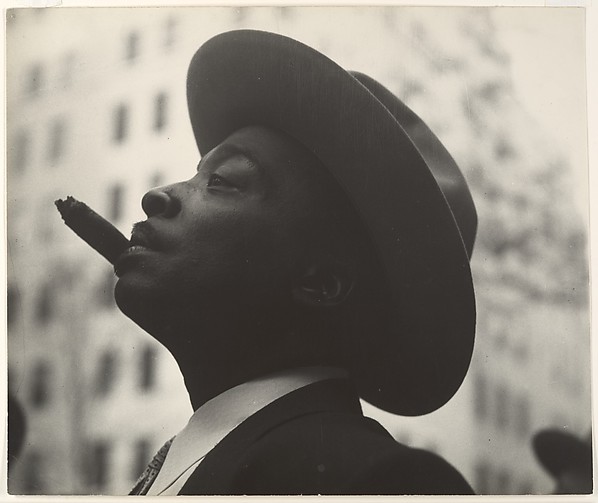
[Head of Man with Hat and Cigar] Leon Levinstein ca. 1960 © Howard Greenberg Gallery

The Editors of Anthropoliteia are happy to announce yet another addition to our “Bibliographeme” suite of features.  This new feature, which we’re calling Tip of the Cap, will be edited by Jenny Carlson, a sociologist of policing  at the University of Toronto.  You can see more about her and her work under the About Us section and at her own personal website.

The series ‘tips the proverbial hat’ to the major works and big ideas that inspire established and up-and-coming scholars alike. In it, we’ll showcase these scholars and the classic works that shaped them.

The first installment of this series is written by Randol Contreras, Assistant Professor of Sociology at the University of Toronto and author of The Stickup Kids: Race, Drugs, Violence, and the American Dream (University of California Press, 2013), and focuses on C. Wright Mill’s The Sociological Imagination.  If you are interested in seeing a scholar featured here please send an email to anthropoliteia@gmail.com with “Tip of the Cap” in the subject line. Enjoy!

Standard
DragNet

DragNet: October 21 – November 3, 2014

It is often the data that is not there that reveals what is most important. I was reminded of this fact again by Scott Vollum's post, The Ghost of the Condemned: What the Death Penalty Leaves Behind, Captured in a Snapshot

It is often the data that is not there that reveals what is most important. I was reminded of this fact again by Scott Vollum’s post, The Ghost of the Condemned: What the Death Penalty Leaves Behind, Captured in a Snapshot

Continue reading

Standard