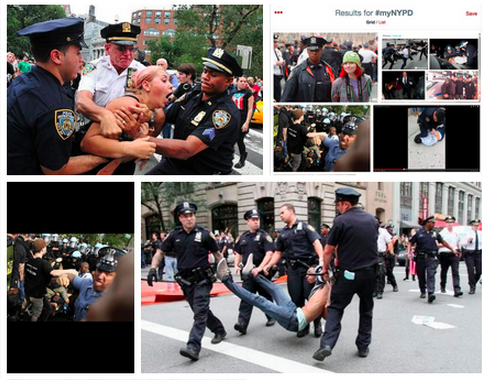
What was on April’s Blog Menu, you ask? A flurry of posts covering everything from issues in ethnicity, crime stat validity, police social media involvement and ongoing Ukraine and surveillance coverage, of course! Continue reading
What was on April’s Blog Menu, you ask? A flurry of posts covering everything from issues in ethnicity, crime stat validity, police social media involvement and ongoing Ukraine and surveillance coverage, of course! Continue reading
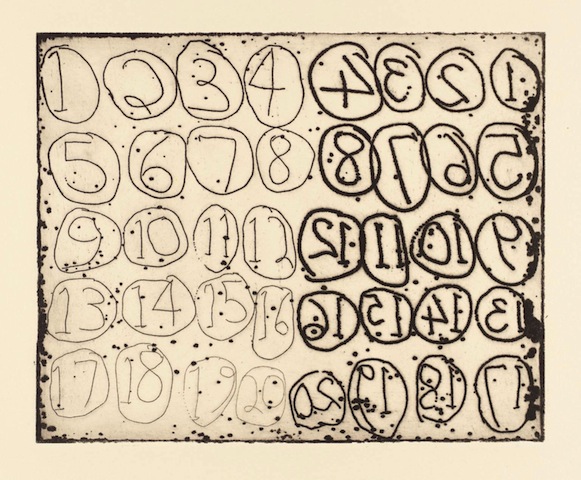
Numbers 1972, reprinted circa 1983 Barry Flanagan 1941-2009 Presented by Sue Flanagan, the artist’s former wife 1985 via Tate UK
Studies in Police Science often use language such as “police initiative x was found to be successful because of an x% reduction in crime.” But what does this actually mean, in any lived sense? To gain perspective I reached out to an officer I worked with during my thesis research back in 2012, to which he replied:
“Crime stats don’t really mean too much on a patrol level. Stats are used by police chiefs to say, “Look what we have done.” Crime has nothing to do with arrests. Poverty has everything to do with it. (His patrol area) used to be one of the most dangerous in the U.S. But when initiatives started pushing out the poor, crime sank to an all-time low. (His patrol area) is yuppie-ville; it has nothing to do with the police department. Most officers like to see spikes in crime when they don’t like the chief. It’s an easy way to get rid of them. When the public feels unsafe the head of the organization gets replaced. So that’s how crime states are used on a patrol level.”
So, there you have it. It appears that crime stats (at least in one officer’s opinion) join the ranks of the other politically charged facets of the criminal justice system. Now more than ever, I’m wondering exactly why these stats carry so much weight in determining which initiatives are “best”…

Hello, OPD
On the train, a boy with a paint-filled shoeshine applicator writes his name on the seat in front of him. He works adeptly and quickly, even turning briefly toward me, grinning, while his hand continues in a smooth, controlled motion. A camera stares at us from the other end of the car. He appears either unaware of its presence or unaffected by its gaze.
—
A crowd waits until midnight to pack 2 hours of City Council time with protest against phase-two funding for Oakland’s Domain Awareness Center. Among those making public comments is a masked ‘Ben Franklin’. ‘George Orwell’ cedes a minute of his time to another speaker. Among jeering and outcry during the council’s discussion, the council-president calls for civility else the public be forcibly cleared.
—
A few days later, wandering on dérive through West Oakland, armed with my own micro surveillance apparatuses (a pair of eyes and a memory, and a digital camera), I snap a few photographs of traffic cams and empty squad cars. Again, I’m struck mostly by their impotence here, by how much escapes or doesn’t mind their field of visibility. I try to imagine how or if data flowing down walls made of monitors in dark control rooms changes being here on this corner.

Sade, Fourier, Loyola
Let us (if we can) imagine a society without language. Here is a man copulating with a woman, a tergo, and using in the act a bit of wheat paste. On this level, no perversion. Only by the progressive addition of some nouns does the crime gradually develop, grow in volume, in consistency, and attain the highest degree of transgression. the man is called the father of the woman he is possessing, who is described as being married; the amorous act is ignominiously termed sodomy; and the bit of bread bizarrely associated in this act becomes, under the noun host, a religious symbol whose flouting is sacrilege. Sade excells in collecting this pile of language: for him, the sentence has this function of founding crime: the syntax, refined by centuries of culture, becomes an elegant (in the sense we use the word in mathematics, a solution is elegant) art; it collects crime with exactitude and address: “To unite incest, adultery, sodomy and sacrilege, he buggers his married daughter with a host.” pg. 156-157
Since people seemed to find it helpful last year, I’ve decided to try and make A@AAA an annual feature. So here you go, my annual round-up of police, crime and security events at this year’s American Anthropological Association Annual Meetings. As always, if you know about a session or paper that I’ve missed, let me know in the comments section and I’ll add it to the list.
Just a FYI to keep us up to date on anthropoliteia “out of place” (i.e. where you normally wouldn’t expect it):
Special Issue: Crime and Madness in Modern Germany
September 2009, Volume 39, No. 3
Guest editors: Ofer Ashkenazi, Udi E. Greenberg, and Jonathan Lewy
Journal of European Studies — Table of Contents (September 2009, 39 [3]).
I’m particularly excited to look at Udi E. Greenberg’s article on Carl Schmitt vs. Walter Benjamin…
 Anthropoliteia