
Although we here at Anthropoliteia don’t have any “existential answers” about how to process the recent events in Ferguson, we hope to provide a safe space for readers to reflect about and share their reactions.
Although we here at Anthropoliteia don’t have any “existential answers” about how to process the recent events in Ferguson, we hope to provide a safe space for readers to reflect about and share their reactions.
It’s hard to know what exactly to say, to think, to feel or how to react at a time like this; even as a scholar of police. Which is not to say that everything in the case is terribly ambiguous. Quite the opposite: another young black man has been the victim of a deadly and unaccountable state violence in front of our very eyes. I suppose the disorientation lay in how to move forward, and for that I have no strong answers.
Embed from Getty ImagesHaving said that, several of us at Anthropolitiea have been active on Twitter, I imagine in an effort to make sense of exactly that existential question. This is not dissimilar to my own reaction during and after the Trayvon Martin/George Zimmerman affair. Below are some of our thoughts, as we form them:
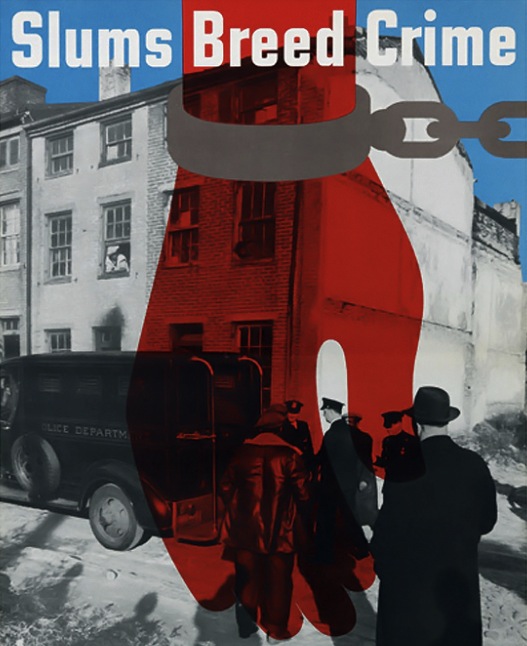
The city’s where the crime’s at, right? Think again. Nic Groombridge reflects about the growing role of rural criminology.

Whether you rely on Twitter, Facebook, Washington Post or Reddit for updates, chances are your August feed has been dominated by discussions surrounding the death of Michael Brown.
Whether you rely on Twitter, Facebook, Washington Post or Reddit for updates, chances are your August feed has been dominated by discussions surrounding the death of Michael Brown. Matt Thompson of Savage Minds touched upon the conflicting coverage of recent events in Ferguson (as well as the implications highlighted by news entities like The Washington Post and New York Times) in his entry, “What is a rioter?” Likewise, the short (and terrifyingly poignant) comic featured in Medium’s August 14th post expands upon the reality of modern police militarization. Among other problems, it emphasizes the role of basic training (or lack thereof) in the police use of military-issued equipment.
If militarization is of particular interest, be sure to check out Taylor Wofford’s piece in Newsweek. Although many associate the growing police use of military grade gear and weaponry with Ferguson protests, Wofford details how departments have been “silently preparing officers for battle” as far back as the early ‘90s.
The Economist’s post Cops or Soldiers? is also relevant to concerns about police militarization. More intriguing is the fact that the article was originally featured back in March (preceding the events in Ferguson). Although SWAT teams are implied as representing an important tool of departments, when and where such teams should be deployed remain key (unanswered) questions.
Of course, Anthropoliteia staff have not been silent bystanders to Ferguson discussions. Meg Stalcup offered insight about the series of events, providing the seldom-addressed topic of officer perceptions. Although the dynamic of officer-civilian relations remains mostly hostile, Stalcup posits that with officer’s “under threat perception, it’s not surprising, although unprofessional and deplorable, that officers menace the protestors they are supposed to protect.” Lastly, don’t miss Anthropoliteia’s second Ferguson post Blue on black violence and original crime: view from Oakland, California. Our developing forum featured Brad Erickson on August 21st. In his post, Erickson uses his own experiences researching the people and police of Oakland, CA to comment on the racial and militaristic implications of Michael Brown’s shooting.
The editors of Anthropoliteia welcome Johanna Römer with a Dossier in our From the Field section.

Police presence at the Marcha por la Dignidad. Photo courtesy of Lee Douglas.
“The history of prisons in Spain?” a Catalan prison guard asked me, a man in his mid-forties, his hands resting on a heavy leather belt. “Everything has already been written. Our vocabulary, our forms of punishment – even the word cell itself, all come from Catholic and monastic practices.”
He turned to face the thick glass wall of the bunker.
“I spent years teaching…in law enforcement, in the private sector, and now I just want to be here, with these guys [inmates], where I can have peace and quiet,” he said, nodding towards a small group of men talking softly around a checked tablecloth whose color was imperceptible through the glass.
“Look at that. No one makes problems.”
While monitoring the inmates through the glass, the guard narrated other stories of prison work; but his last seemingly unremarkable comment, “no one makes problems,” stayed with me.
The editors of Anthropoliteia welcome Sean T. Mitchell with the latest entry in our forum Security in Brazil: World Cup 2014 and Beyond.

A June 19, 2014 São Paulo protest called by the Movimento Passe Livre (Free Fare Movement) to protest transport fares and conditions was mischaracterized internationally as an “Antigovernment” and “World Cup” protest. The banner in front reads, “There will be no fare.” Photo: Oliver Kornblihtt/ Midia NINJA
On Failure, Violence, and the World Cup
Not unlike the 2010 hoopla anticipating that year’s South Africa World Cup, the breathless expectation of failure and security breakdown that characterized much international coverage of the lead up to Brazil’s 2014 World Cup, now, midway through the month-long event, seems to have been ill–founded.
When reporting wasn’t merely what Meg Stalcup characterized on this forum as fluff—which much of it was—pre World Cup coverage in the global north press was overheated and macabre. Why?
The last year has seen the emergence of large scale Brazilian protest movements of clear importance, and the World Cup has been a target of their criticism. But the macabre emphasis on violence and failure has obscured much more than it has illuminated about these movements, and about the real violence and social conflicts in contemporary Brazil.
To understand why so much coverage has taken this lurid form, it helps to look at historical representations of peace and violence in Brazil, as well as contemporary politics in Brazil and abroad.

A water tower in Catia with Hugo Chávez’s face on one side and the face of Lina Ron (founder of the Venezuelan Popular Union party and symbol of La Piedrita, another well known collective) on the other © Richard Snyder 2014
In my last post I looked at the security force that is playing the most active role in policing the protests: the National Guard. While police officers overwhelmingly support the National Guard’s participation, there is second group that the police identify as “policing the protests” whose presence they do not condone: the collectives.
The collectives’ relationship to the state and state security forces has garnered much attention in the press since the protests began. Providing little evidence, recent news reports (the Wall Street Journal , the BBC, and AlJazeera to name a few) have suggested that the police are working alongside and in collaboration with the collectives to repress protestors. And this past week Human Rights Watch, though avoiding the term “collective,” published a report suggesting that the police and “armed pro-government groups” were in collusion with one another.
But National Bolivarian Police (PNB) officers describe this relationship quite differently, reporting that they must compete with the collectives for territorial control, access to arms, and even state protection. For them, their relationship to the collectives is one structured by competition, not collaboration. In fact, since the Metropolitan Police in Caracas sided with the opposition in the 2002 coup against Chávez, officers feel that the government trusts the collectives–ideologically aligned with the Bolivarian Revolution–more than the police to work the protests. Though the police as an institution is often defined by its ability to legitimately deploy force in order to protect the state’s interests, officers perceive the collectives as primarily designated by the state to fulfill this function.
In this post, I provide a brief summary of the collectives’ history and then describe how police officers talk about their relationship to the collectives. Continue reading

Riot police gather in front of a mural of the mascot for the 2014 World Cup soccer tournament, called Fuleco, near the Maracanã stadium ahead of the Confederations Cup soccer final between Brazil and Spain in Rio de Janeiro, Brazil, Sunday, June 30, 2013. (Source: AP Photo/Victor R. Caivano)
The Editors of Anthropoliteia would like to welcome Stephanie Savell as guest editor of an invited developing Forum on Security in Brazil: World Cup 2014 and Beyond
The media is full of stories about Brazil, particularly stories of urban violence, protest, and police repression. Many news stories make the link to the upcoming June 2014 World Cup and the 2016 Olympics in Rio de Janeiro, wondering more or less explicitly whether such violence will affect the games and visitors to Brazil. Brazilian activists and citizens have been protesting the massive spending on infrastructure and highly visible public security measures being taken in preparation for the global games, asking, among other things, “What happens in 2017?”
In Rio de Janeiro, much controversy revolves around the flagship program known as “pacification,” in which state security forces wrest territorial control of favelas from drug gangs and install police posts in these informal settlements. I just spent the past year living in the “pacified” Complexo do Alemão, a sprawling favela notorious for its crime-related street violence. Here residents perceive an ongoing battle for control between police and the still present but now slightly more covert gangs, and many believe the gangs are gaining ground. In recent months, escalating violence has many in Rio wondering whether the pacification program will collapse.
From an anthropological viewpoint, the significance of how security in urban Brazil has been developing reaches far beyond what the media portrays as preparation for the games. Current trends must be understood in the context of a history of both repressive policing and alternative community policing programs in Brazil. There are pressing questions to be asked about the deployment of the military in urban neighborhoods and the use of private security firms and personnel to fill gaps in state capacity. Additionally, there are multiple dimensions of a broader understanding of the term “security” that are obscured by the focus on public security in the context of the forthcoming global sporting events. For example, many Brazilians protest the economic and social costs of hosting the games, at a time when the government fails to meet the basic needs of citizens, and as many favela residents are displaced by infrastructure projects and real estate interests. Unemployment, racism, gender disparities, suppression of popular uprisings, lack of freedom of the press, environmental precariousness, and the enforcement of state regulations in informal settlements are just a few of the insecurities at stake in pre- and post-World Cup security practices.
Anthropologists like myself, and ethnographers in other disciplines, have in recent years been investigating ever more closely how security is experienced, understood, and contested in the everyday lives of urban Brazilians. Through historical and ethnographic fieldwork, such analyses seek to characterize the forms of governance through which security emerges. In a timely discussion leading up to the June 2014 World Cup, several of us will take the opportunity to share posts as part of a special invited forum on Anthropoliteia to discuss and reflect on some of the issues of the contemporary security moment in Brazil and shed light on what takes place behind the news.

Images of burning tires, masked youth, and clashes between citizens and state security forces have accompanied almost all news coverage of Venezuela for the past few weeks. And these well-documented protests and the government response to them have, as blogger Francisco Toro wrote, changed the political game in Venezuela for the foreseeable future.
To fully appreciate these changes, however, we need to also appreciate the geographical limits of the opposition protests. Taking into account where protests are not occurring, and why, is important in understanding what they represent for residents who do not live in the zones where protests have erupted.
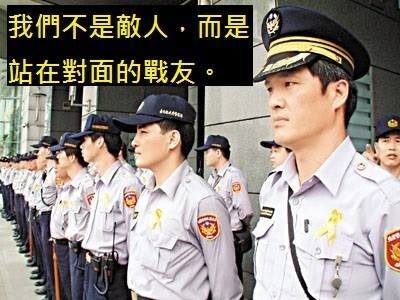
“We are not enemies. We are allies that stand facing one another” (caption to a picture that is purportedly an expression of police attitudes towards the recent occupation of Taiwan’s legislature)
In the context of a loving relationship between consenting adults, it’s normal for police to get screwed from both sides. Taiwanese democracy is sometimes a strained marriage, however. Tensions are introduced to any enterprise of collective self-determination when the great power next door insists your state does not exist. The existential tensions of Taiwanese democracy are currently being expressed in a constitutional crisis. Last Tuesday night, the unpopular president’s ham-fisted attempt to fudge the procedures involved in his party’s pursuit of economic integration with China blew up in his face. Dissident students (later joined by their professors, constitutional law scholars and, increasingly, the general public) occupied the legislative assembly to physically prevent the conclusion of a process that would have endowed an agreement concluded between legislatively unqualified bodies with the force of statutory law.
 Anthropoliteia