The editors of Anthropoliteia welcome Olly Owen with a dispatch from fieldwork with police in Nigeria. Olly Owen is ESRC research fellow at Oxford University’s Department of International Development, and has been working in Nigeria since 2003.
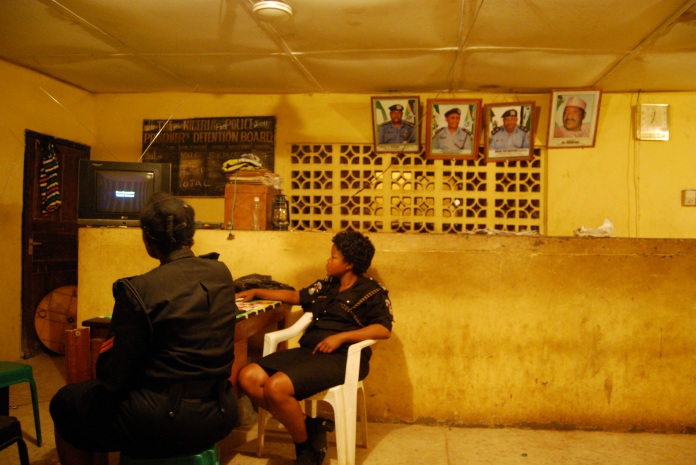
Here is a story from my fieldwork in Nigeria in 2011. I was going to contextualise this story more, with an introduction which draws out its implications. I would have analysed what it says about values, conceptions of professionalism, public evaluations of effectiveness, small-town insecurity, fear and distrust, the symbiotic relationship between the politician and the policeman and their at-once-shared, at-once-conflicting interests in keeping the peace and staying in power I would also have considered what else it tells us about the everyday distance between the police and the public which requires the use of interlocutors, and the resourcefulness, the improvisations and blunt methods used to be efficacious in this resource-poor environment. But if you’re reading this blog, it’s likely you’ll be alive to those meanings and able to see them in the testimony here related, without me labouring the point and killing the material. So all I will do by way of context, is say that this took place while I was staying in a university located in a medium-sized town in southern Nigeria. All the place names mentioned here are pseudonyms, necessary due to the potentially sensitive nature of the truth in an environment where both politics and policing are as much about carefully-preserved representations as realities. For the sake of transparency, I should say that we talked in English which I recorded in notes.
It is a slow weekday morning, and I am bored so I walk across the grass with a petty excuse to go and call on my neighbour in the staff quarters. There in his house I meet a man, a former colleague, who is steadily working his way first through cups of coffee and then glasses of red wine. My neighbour introduces him as a friend and former colleague who has left academia for politics and has won election as the town’s Local Government Chairman[1]; but this coveted job is proving no bed of roses as, after three months, there are continual staff crises in his office; and so he has come to campus to hide from the madding crowd and console himself for a few hours. He asks me who I am and what I’m doing here, and when I tell him I am doing an anthropological study of policing, he leans back and expresses how he thinks that would play in Nigerian academia:
Anthropology of policing ehn? Hmm… That subject, in this country they will just kill it. ‘OK, it’s good but where will you get funding from, so we won’t pass it…’
Then remembering something more important, he begins –
I know a very fantastic police officer, who is DPO here.[2] When they took away the old DPO we complained, because we had rapport – like he relates very well to all these community leaders, they are the ones giving information – not knowing that they are giving us pure gold. This DPO, wasn’t supposed to be DPO, he was second (choice,) but the one who was supposed to go (first) now committed one atrocity so bad they couldn’t cover it up. In fact, he committed two; the first they covered but the second had become unmanageable so that even his senior had to run for cover.
So when the elections came around, we sat down and he said ‘Oga,[3] what do you want?’ And I said, ‘I want a free and fair election’. And he said, ‘Oga, how will it affect you if there is a free and fair election?’ And I said, ‘I will certainly win massively because the people are in support of us’. So he said ‘that means if it is disrupted it may be problem for you?’ I said, ‘sure’.
He said ‘OK, this is how we will do’. He said ‘just take this paper, just sign, that is all I need’. And if you see the money he asked for it’s not much – I was thinking it’s some hundreds of thousands, but it’s not up to fifty K[4] – just ten buses, because ‘I’ve been thinking’ (says the DPO) ‘election law says we can’t have armed police at polls, but there is nothing to say we can’t have pressure points. So give us ten (mini) buses, with fuel, and we have eleven wards, station them around, and small money for ‘corner-corner’[5], then I can get some extra weapon from HQ. Then accreditation will be very quiet. So about 12 (noon) when voting starts my men will just pretend there is one emergency – rush there, show of strength, and people will see us coming back (thinking) like ‘they are very calm, they have dealt with the problem’.
I know political thugs in Nigeria. One thousand of them can’t stand up to two fully ready – I mean fully ready – policemen. They are not like these other countries (he gestures vaguely with his hand towards the TV where we have just been watching Al Jazeera coverage of angry protests in Egypt); if you shoot one of them, even in leg, the others will just run. So all you have sacrificed is one leg and you have peace.
At this point, my neighbour chips in to affirm “because they are just doing it for money; small money.” The politician continues:
The DPO said ‘just give me about twenty (phone) lines, it can be the lowest[6] one, only it must be Nokia, then a small gen so even if there is no light we know they are charged’.[7] And it went very smoothly, because in this town we are used to thugs, and if you come to vote they will say ‘no, go home, we have already voted for the party you want, go home and don’t trouble yourself’; and if you talk (back) too much they can cut your leg, or anything. But if people see they can freely vote, someone will come and say ‘I have voted, it was fine’, someone else will now vote.
So after election he came to me and said ‘Oga, now I am very sure we will see rise in robbery, because they have given these boys guns and they have not been given chance to use them – like me, we have tried, we have collected about 55 guns but it’s a lie, we know there are more’. So it’s true! After about one week they started to rob, and he said ‘this is all the work of one gang’ because he studies them. They will enter Ilafon road and leave by Ijebu road. So instead of chasing them around town, he will just watch how they do, send his guys to see them. So they put ambush down that roundabout by Oke-Idanre. But they never reached there and they didn’t go back down the Ilafon road.
So they would usually come a day ahead; like if one week they come by Tuesday, the next they would come Wednesday, and there was only one time they reversed it, thinking that by that, no-one would catch them or be waiting and they can continue to rob Iife until they tire and go and rob somewhere else. And they would usually come and 6 or 7 o’clock to rob cash points around the town, like chemists, supermarkets, and most times they will abduct one or two girls. Sometimes they will let them go, sometimes they can kill them.
So the DPO is telling me that ‘Oga, I’m very sure they have a hideout somewhere’; as we used to sit down and drink red wine like this. And I would just stop listening, as he always has one theory or other, like in security meeting, and all the time no (result). But I continue to listen to him because of how he handled election, and if he asks for something, I am the chief security officer of the Local Government, so I say ‘take’. So he is asking for unmarked car, all sorts of things, I give him.
So he starts to think and says ‘There must be one girl who has been raped and knows where they go’. So he asks all of the community leaders ‘Baba, is there any such girl who has recently been raped by armed robbers’? So one day one girl turns up at the police station and says ‘Baba says I was to ask of you’. So he says ‘Sit’, and that, ‘listen, I know what has happened to you, but do you want them to be arrested?’ And she says ‘yes, only they said if I tell anyone what has happened they will find me and kill me’. And so he said ‘take me to the place’, and it was a forest, a thick bush, about three kilometres off the road, a very dense place.
They will just drive the car they have stolen inside and disguise it with the branches they have broken, and move inside again. So they reached the place and there was girls’ clothing all around and underwears and this is the place quite alright. And she said there are five of them, Igbirras from Okene and each of them will have a round (at raping her). So he took her home and said ‘Tell Baba that when you came you didn’t meet me in the office; otherwise if anyone hears and you die, it’s not from me because I am not going to tell anyone, but if you go back to Baba saying these people are going to be arrested, OK, anything could happen’.
So if she told or she didn’t tell, I don’t know. Then the next week the DPO said ‘we’re going to get them tonight’, and I didn’t listen cos he always has a story; then about 2am my phone went and I didn’t answer, because it’s usually these useless people (pests), then he rang again by 4am and I picked it and he said ‘I am in the hospital, about eight bullets hit all around me but I’m OK’.
So what happened is that a woman reported her (Volkswagen) Golf taken and her husband kidnapped in it.[8] And so they don’t bother chasing them round the town, they just went straight there – he had been preparing a few men – just pick you, and you, and you – but without telling them what for, and waited there. And they were there from 9pm to around 12, then the DCO[9] says ‘Sir, let’s stay a little longer’, and just they were whispering, as if you talk, it will travel…
Then the Chairman starts to whisper:
…and just as they were about to go, the DPO is thinking it can’t be that in two weeks they have prepared another hideout, because it takes time to know the anthropology of a place.
So as they were about leaving, one of the robbers appeared – looked around – went. Came back with another one, then a third. So they were already there the whole time! Because the woman had reported the case late. So, while he was wondering what to do, because it’s a split-second decision, where are the other two? And they could have had the guy or a girl with them.
Now another one appeared, so he felt OK, we can shoot; but just then the DCO raised his hand to tap his arm and the robber with a gun saw the movement and fired at it, and all these bullets fell around him; and he said he was in pain but he fired back, concentrating on the one who was shooting, while the others were targeting others; and after they took him and carried him to the car but he said ‘wait, go back, look for the other one, since he can still follow this path or otherwise he’s going through the bush’. And what happened then I don’t remember.
Then in the hospital, general hospital here, he called me. He’s a proper African man O! Bullets hit him but they didn’t enter! (My neighbour tries to explain, to rationalise, this means they hit him but didn’t cause any significant damage). He was in the hospital and he called these Alfas[10] from near Oyo and the nurses won’t let them in. So as they are changing shift they take a while to get ready, so he just called the Alfas to come in, and if you see someone that can talk to bullet; I mean (mimes quiet incantation) and then phtoo! spit out bullet.
I may give you a note for him, and so maybe we’ll get together.
While listening to this, and now again while re-reading my notes, two things come to the front of my mind. One is the concept of radical insecurity (see Africa’s vigilantism special issue) deployed by the anthropologists of vigilantism, and how profound this is to the people of a town where a gang of robbers and rapists can repeatedly descend on the inhabitants, and where the state can’t do a thing to stop it unless someone takes it on themselves to engage the problem personally. The other is that this mode of policing and governance epitomises Thomas Bierschenk’s ‘lack of prospective vision’ (see the states at work project) – the absence of a public administrative sphere defined by targets, plans and defined policy goals – but re-centres what replaces it – the abundance of tactical mastery which grows up in a place where strategic vision is prevented. There is no set strategy for combating raids in this state or region, and no dedicated resources available to do it, so what the dedicated police officer must do is deploy craft and experience to gather resources, secure political will, build links to gather intelligence from the community to which he will (at that senior level) have only recently been posted, evolve a plan and then lead from the front in putting it into action.
Beyond that, it captures the difference between those who idealise the goal of reforming systems—for whom a free and fair election is a goal and marker of stability and democratic consolidation—and those who live by politics, for whom free and fair election is simply one tactic among many, to be deployed if you think you’ll win by it. And within election periods, the story also showcases the extremely abundant circulation of arms which accompanies elections at even the lowest tier of government, in a place outside Nigeria’s main arcs of instability; and thus the absolutely central importance of the public feeling secure if genuine elections are to be viable at all.
Whatever the task, election or anti-robbery operation, if there’s no kit, you must procure what’s needed for each operation specially. And what is valued is a reliable and rugged kit – AK47s and Nokia, which must be provided from some of the same actors who are being policed, or else begged, borrowed or procured through wiles within the police system itself.
Most of all however, I am left mulling the simple and practical calculations of those who are tasked with using violence to preserve peace; that one leg is a bargain price. A “good DPO” is one who can see that, evaluate the options and take the risk of action in a system where success normally goes uncelebrated and failure brings personal risk or at best punishment from superiors who never mandated this, or indeed any, action, and will rush to distance themselves if it fails. As the story relates, this manifests in two central values – integrity, here meaning not clean-handed idealism but a sense of personal responsibility and duty; and craft – the practical mastery of human and material means to ends.
So far as research questions are concerned, perhaps this story also suggests that in such contexts we need to concentrate not so much on systemic failures and absences, but on what replaces them – practice, craft, experience, bricolage, and the ways in which these solutions are devised, learned, transmitted, and made publicly popular or politically palatable. Much more, as a basic starting point of ethnographic policing research, we need to generate our baseline of reality not in normative considerations or lessons drawn from elsewhere, but in a very thorough and careful appreciation of what constitutes the terrain of assumptions, norms, values, material limitations, political possibilities, risks and options for action in the places where we work, before we can even begin to understand what choices are made and why, by the people with whom we work.
[1] Nigeria’s Constitution has three levels of government, each executive-led – Federal (national) Government; State Governments and Local Governments.
[2] DPO is the everyday acronym for Divisional Police Officer
[3] Respectful address meaning (roughly) ‘boss’.
[4] 50,000 Naira, or around $250 at the time.
[5] ‘Corner-corner’ means dodges or making moves, to procure goods and permissions and to smooth the path.
[6] I.e. cheapest.
[7] A small petrol generator is the easiest stopgap solution for the several times a day power supply fails in every town in Nigeria.
[8] Car thieves do this to deter the victim from reporting the crime, in order to give them time to escape.
[9] The DCO or Divisional Crime Officer is the officer directly responsible for supervising criminal investigations within a division, reporting to the DPO as senior manager.
[10] An Alfa means a Muslim cleric, especially used to mean one who engages in traditional services such as spiritual healing or protection.
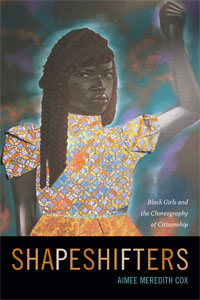 The editors of Anthropoliteia are happy to present the latest entry in on ongoing series
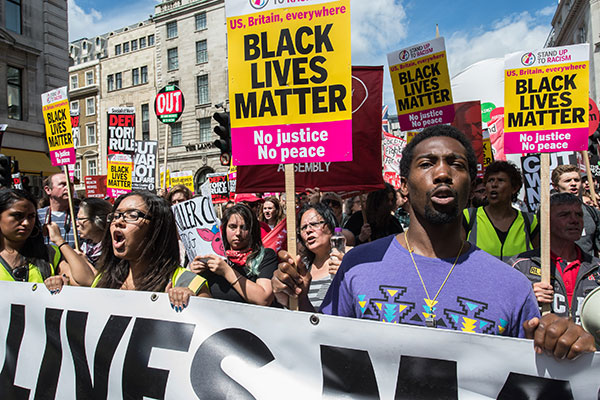
  The editors of Anthropoliteia would like to welcome Dr. Sameena Mulla to introduce our newest project, The Black Lives Matter Syllabus Project, which will mobilize anthropological work as a pedagogical exercise addressing the confluence of race, policing and justice.





 Anthropoliteia