Commentary & Forums, Security in Brazil: World Cup 2014 and Beyond

A Conflicted Brazil on the Eve of the World Cup

The editors of Anthropoliteia welcome Meg Stalcup with the latest entry in our forum, Security in Brazil: World Cup 2014 and Beyond.
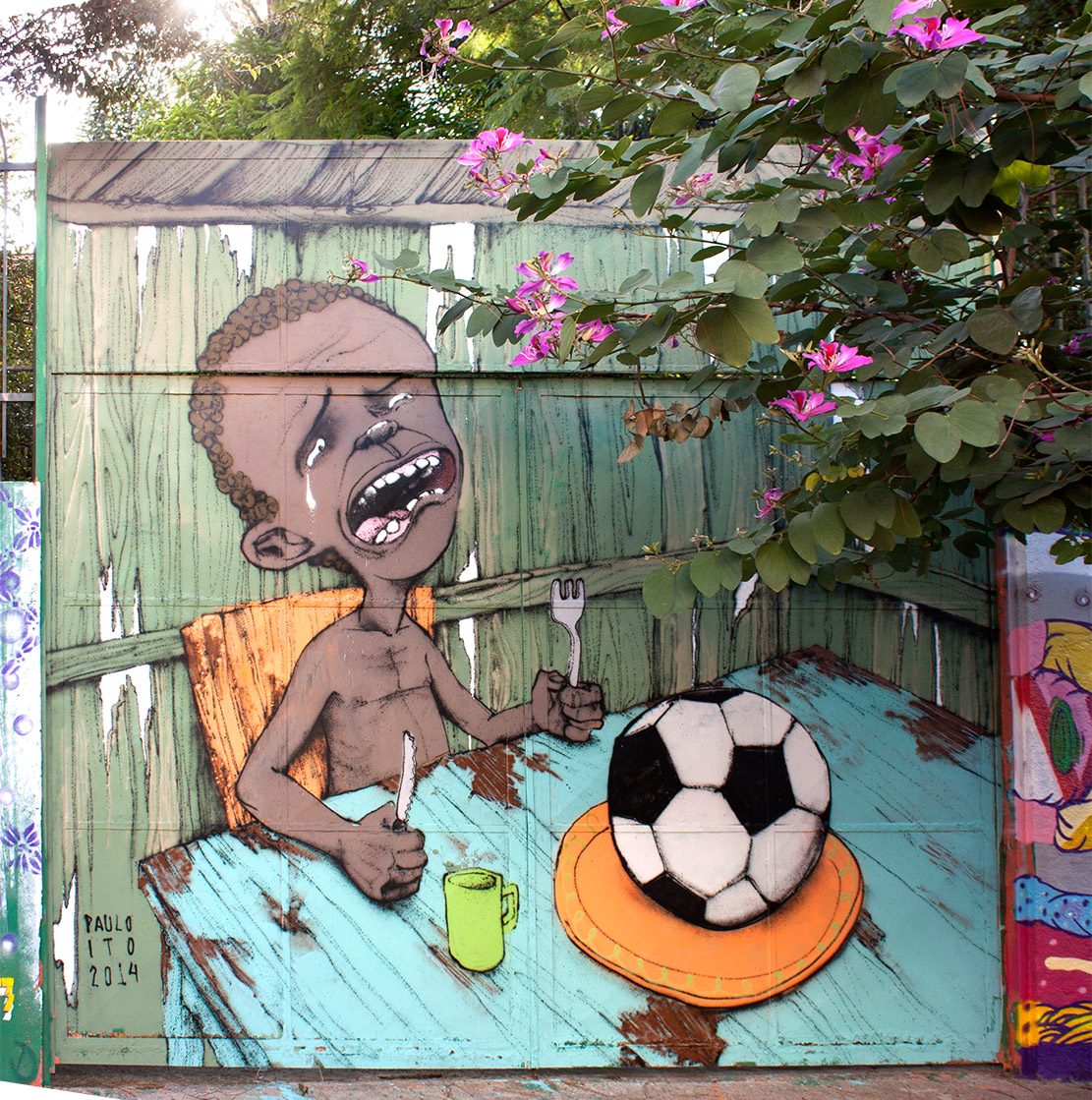
“evento da pompéia 2014.” Paulo Ito. Courtesy of the artist CC BY-NC-ND 2.0

“evento da pompéia 2014.” Paulo Ito. Courtesy of the artist CC BY-NC-ND 2.0

News and social media around the world are carrying stories about the tear-gassed transportation strikers in São Paulo, violence and conflict with the police in Rio’s favelas, and – witty but no less serious – John Oliver’s scathing explanation of the problems with the Fédération Internationale de Football Association (FIFA), which drew on major media reports about the organization’s well-known illegal cash-for-contracts corruption, and also its scandalously legal pillaging of World Cup host countries.

For those who have been following the preparations for the World Cup in international reporting, or this forum, strikes, protests and corruption are no surprise. Continue reading

Standard
Conferences

Ethnography and Policing workshop, Institute for Advanced Study

2014_05_06_IAS_Workshop_Group

Workshop Participants. Back row, L to R: Julia Hornberger (Wits, South Africa), Jeffrey Martin (Hong Kong U, Taiwan), Daniel Goldstein (Rutgers, Bolivia), Susana Durao (U Campinas, Portugal), Duncan McCargo (Leeds U, Thailand), Didier Fassin (IAS, France), Steven Herbert (U Washington, United States), Clara Han (Johns Hopkins, Chile), Elif Babül (Mount Hollyhoke, Turkey). Front row, L to R: Beatrice Jauregui (U Toronto, India), Helene Maria Kyed (Dansk IIS, Mozambique).

From May 4-7, 2014, a workshop was held at the Institute for Advanced Study on the topic of “Ethnography and Policing.” Below is a short summary of the workshop’s premise and scope, as described by Didier Fassin, who organized the gathering.

In the past half century, there has been a considerable amount of scientific literature in criminology, sociology, political science and legal studies on urban policing, that is, on the practice of law enforcement mostly in the poor neighborhoods of large cities. Part of this work is grounded on some form of participant observation, which complements other techniques such as interviews or questionnaires, and nourishes the analytical and theoretical arguments developed by the authors. However, this ethnography rarely appears as such. It is usually not presented, save occasionally in the form of short vignettes, or discussed, from the perspective of the specific contribution of this method. Significantly, until recently, anthropologists themselves seemed to ignore policing practices.

In the past decade, however, this situation has begun to change, as scholars increasingly and explicitly include ethnographic elements in their study of police work. The objective of the workshop was to bring together social scientists who have conducted research on urban policing in different parts of the world, using ethnography, in order to collectively reflect on the conditions, potentialities and limits of this method, the problems of interpretation and the ethical issues it raises, and the way local findings can be related to larger historical context and sociological issues. The general idea was to take ethnography seriously rather than as a mere background rendered invisible in the process of writing. Considering the importance of public debates on policing in contemporary societies, particularly on the way law is enforced in poor neighborhoods, which raises questions about racial discrimination, display of violence, and reproduction of an unequal social order, the exchange of ethnographic experiences has been rich. The outcome of this workshop will be a collective volume.
Standard
Practicum

New Feature: Practicum– Applying Anthropology to the Study of Policing, Security, Crime and Criminal Justice Systems

Police Call Box, Washington, DC © Jennie Simpson 2014

Police Call Box, Washington, DC © Jennie Simpson 2014

Welcome to the new bimonthly feature, Practicum on Anthropoliteia! I am your host and will be guiding this journey into an exploration of the intersections of applied and practicing anthropology with the study of policing, security, crime, and criminal justice systems. Today’s column focuses on mapping out the unique niche of applied work in policing. Comments are welcome!

A year ago, I was asked by a former chief of police now active in policy and research to write a white paper mapping out what a “police anthropologist” might look like, replete with arguments on how anthropologists could contribute both to the study of policing and to police departments. I spent many hours reflecting on my own work with police agencies and imagining how I could translate anthropological aims and methods into work with police agencies. The result was a thoughtful exercise in outlining how anthropologists might be integrated into the world of policing, in which I argued:

Continue reading

Standard
Security in Brazil: World Cup 2014 and Beyond

Pacifying Rio’s Favelas: innovation, adaptation or continuity?

Photo: SEASDH - Secretaria de Assistência Social e Direitos Humanos, Rio de Janeiro

Photo: SEASDH – Secretaria de Assistência Social e Direitos Humanos, Rio de Janeiro

The editors of Anthropoliteia would like to welcome Ben Penglase with the latest entry in our developing forum, Security in Brazil: World Cup 2014 and Beyond.

Brazil’s favela “pacification” policy, implemented by the state government of Rio de Janeiro beginning in 2008, is the most recent example of efforts by the Brazilian authorities to produce security. Coming before Brazil hosts the 2014 World Cup this June, and before Rio hosts the Olympics in 2016, and tackling that most visible and now internationally-renowned symbol of urban chaos – the city’s hillside favelas – the policy has attracted widespread attention. The Rio authorities have lost no opportunity to dramatize the supposed “take-over” of favelas by the army and police – often planting the Brazilian flag in neighborhoods “rescued” from drug traffickers – and the UPP (Unidade de Polícia Pacificadora, or Police Pacifying Unit) policy has become symbolic of a wider attempt by Brazilian authorities to create a safe urban landscape. Yet events in the past two years have called the UPP’s success into question. Shoot-outs between drug-dealers and police in several favelas where UPP units are in place, and a massive protest by residents of the favelas of Pavão-Pavãozinho and Cantagalo after the suspicious death of Douglas “DG” Pereira, have brought media attention to those who question the policy’s effectiveness.

In the midst of all this visibility and scrutiny of the UPP policy, several fundamental assumptions about the “pacification” policy often go unexamined. Drawing upon my own history of observing changes and continuities in policing in Brazil, and especially in Rio, for over twenty years, I would like to problematize these guiding assumptions which have often framed depictions of the pacification policy by both the media and Rio’s policy-makers. Continue reading

Standard
DragNet

DragNet, April 2014

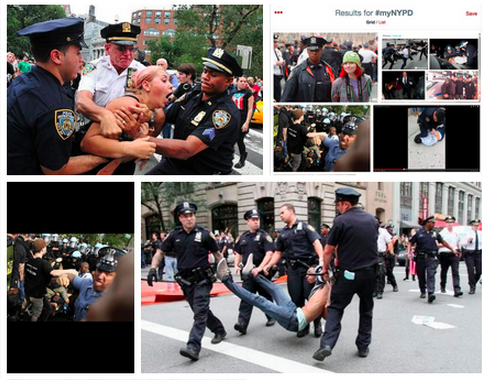
#myNYPD

What was on April’s Blog Menu, you ask? A flurry of posts covering everything from issues in ethnicity, crime stat validity, police social media involvement and ongoing Ukraine and surveillance coverage, of course! Continue reading

Standard
Dossiers

Ethnic Profiling as a Societal Institution in the Netherlands

The editors of Anthropoliteia would like to welcome this special “Dossier” from our own Paul Mutsaers

Psychologism and profiling ‘the other’

It is common knowledge in the sociology of police that law enforcers do not merely apply legal maxims but ‘employ discretion in invoking the law’, as Egon Bittner already put it in 1970 in The Functions of the Police in Modern Society. There is often not much consistency in the application of the law as beat officers have a large leeway when they operate in the blind spot of their desk superiors, that is, on the street. While on the beat, policing may be turned into a mechanism of social ordering that has the potential to significantly alter the life prospects of those who are encountered. When roaming in the districts, containing a demonstration, responding to an emergency call, mediating a conflict, investigating a homicide, or containing a riot, the police are actually (re)producing social hierarchies and differences in the settings in which they operate. Continue reading

Standard
Dispatches


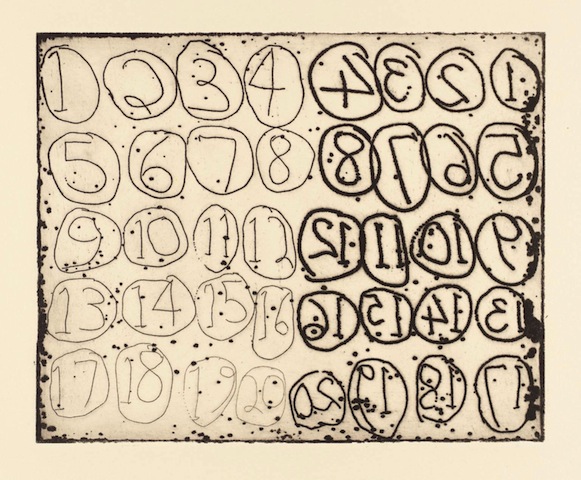
Numbers 1972, reprinted circa 1983 by Barry Flanagan 1941-2009

Numbers 1972, reprinted circa 1983 Barry Flanagan 1941-2009 Presented by Sue Flanagan, the artist’s former wife 1985 via Tate UK

Studies in Police Science often use language such as “police initiative x was found to be successful because of an x% reduction in crime.” But what does this actually mean, in any lived sense? To gain perspective I reached out to an officer I worked with during my thesis research back in 2012, to which he replied:

“Crime stats don’t really mean too much on a patrol level. Stats are used by police chiefs to say, “Look what we have done.” Crime has nothing to do with arrests. Poverty has everything to do with it. (His patrol area) used to be one of the most dangerous in the U.S. But when initiatives started pushing out the poor, crime sank to an all-time low. (His patrol area) is yuppie-ville; it has nothing to do with the police department. Most officers like to see spikes in crime when they don’t like the chief. It’s an easy way to get rid of them. When the public feels unsafe the head of the organization gets replaced. So that’s how crime states are used on a patrol level.”

So, there you have it. It appears that crime stats (at least in one officer’s opinion) join the ranks of the other politically charged facets of the criminal justice system. Now more than ever, I’m wondering exactly why these stats carry so much weight in determining which initiatives are “best”…


Wondering About Crime Stats

Aside
Dossiers

Order by the Books: Suicide crime scene investigations in southern Mexico

The editors of Anthropoliteia would like to welcome a special guest post from Beatriz Reyes-Foster as part of our series of anthropological reports From the Field

Abstract

The complex and contested relationship between representatives of a Mexican law enforcement agency and the citizenry it claims to protect is visible in the documents it produces. Ethnographic material further deepens our understanding of the ways in which law enforcement agents and common citizens form relationships based on negotiation and distrust.

Continue reading

Standard
What's going on in Ukraine?

Ukraine Roundtable

Ukraine memorial

Memorials for the dead along Institutka St. © Jennifer Carroll

Both Allegra and Anthropoliteia have been busy covering the political developments in Ukraine and Crimea, so we decided to “collaborate” on our coverage by bringing together the various contributors to pause and reflect on the question: “What has struck you the most, or been most noteworthy, about the developments in Ukraine—from EuroMaidan to Crimea—so far?” Continue reading

Standard
Announcements, Call for papers

CFP Anthropoliteia-sponsored panel at the 2014 AAA Meetings

Long-time readers of Anthropoliteia may remember that some of the first “extra-curricular” iterations of the blog were at panels at the 2009 and 2010 Annual Meetings of the American Anthropological Association.  In my own humble estimation, these were extremely productive conversations, and not only because they resulted in an edited volume that was published by Palgrave Macmillan last year, of which we’re all extremely proud.

In that vein, and to broaden the conversation, we’ve decided to try sponsoring a panel on anthropoliteia-related issues this year.  If the experiment is successful, it may even become an annual thing.  Please read through the following CFP and consider offering an abstract.  Also, please pass this announcement on to anyone else that may be interested.

Call for Papers: Thinking through police, producing anthropological theory

For a session to be submitted to the 2014 Annual Meetings of the American Anthropological Association (Washington DC, December 3–7, 2014).  Dr. Kevin Karpiak (Eastern Michigan University), organizer.

Continue reading

Standard