Practicum

New Feature: Practicum– Applying Anthropology to the Study of Policing, Security, Crime and Criminal Justice Systems

Police Call Box, Washington, DC © Jennie Simpson 2014

Police Call Box, Washington, DC © Jennie Simpson 2014

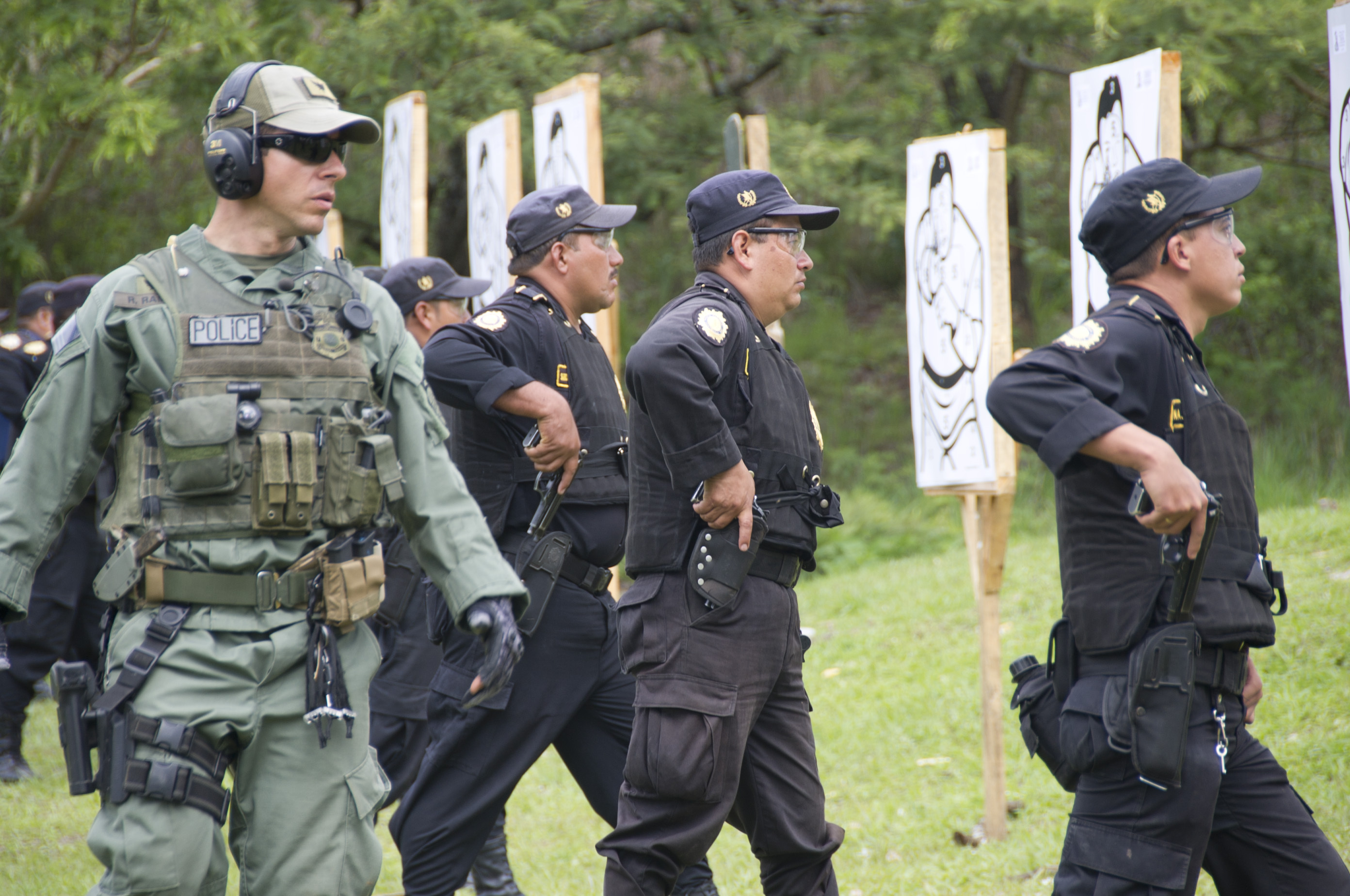
Welcome to the new bimonthly feature, Practicum on Anthropoliteia! I am your host and will be guiding this journey into an exploration of the intersections of applied and practicing anthropology with the study of policing, security, crime, and criminal justice systems. Today’s column focuses on mapping out the unique niche of applied work in policing. Comments are welcome!

A year ago, I was asked by a former chief of police now active in policy and research to write a white paper mapping out what a “police anthropologist” might look like, replete with arguments on how anthropologists could contribute both to the study of policing and to police departments. I spent many hours reflecting on my own work with police agencies and imagining how I could translate anthropological aims and methods into work with police agencies. The result was a thoughtful exercise in outlining how anthropologists might be integrated into the world of policing, in which I argued:

Continue reading

Standard
Book Reviews

Revisiting ‘Policing the Crisis’

 Policing the Crisis Cover
Book review– Stuart Hall, Chas Critcher, Tony Jefferson, John Clarke and Brian Roberts, ‘Policing the Crisis. Mugging, the State and Law & Order’ (2013[1978])
By Merijn Oudenampsen, sociologist and political scientist working as a PhD Candidate for the Dept. of Culture Studies at Tilburg University, the Netherlands

Revisiting “Policing the Crisis”

On the 17th of August 1972, a British newspaper reported on a violent robbery as ‘a mugging gone wrong’. The article was accompanied by the following headline: ‘As crimes of violence escalate, a word common in the United States enters the British headlines: mugging. To our police, it’s a frightening new strain of crime.’

At this point, the study ‘Policing the Crisis: Mugging, the State, and Law and Order’ first published roughly 35 years ago, begins its ever-widening exploration: from crime statistics to the police, from the media to the courts, from the state and the core beliefs of British society to the advent of Thatcherism. The kaleidoscopic nature of the book evokes associations with the HBO television series The Wire, where each season navigates a different institutional aspect of Baltimore’s social troubles: the black ghetto drugs economy, the dwindling labour market, the police and the city government, the school system and the media. In so doing, The Wire acts out a core insight of Policing the Crisis, namely that crime cannot be seen independently from the institutions that aim to control and report on it. Agencies such as the police, the courts and the media do not passively react to a given crime situation, they ‘are actively and continuously part of the whole process’ (p54). The book and the television series also share an ability to explain these complex matters in clear and accessible language. Even though a lot has changed in criminology – consider contemporary trends such as the rise of target culture and risk management – there is still much in this book that is relevant in understanding contemporary developments. At the end of this article, I will shortly aim to illustrate that by looking at the uproar concerning Moroccan immigrant youth in the Netherlands.

A moral panic

The first step taken in the book is to statistically dismantle the newspaper headline: mugging at the time is shown to be not in any way new, the major part of the escalation of crime took place in the decade before. Similar things can be said about the appeals to tougher sentencing and the media reports blaming the soft policy of judges for the alleged crime wave. In fact, longer sentences are passed and more offenders are being sentenced. What’s more, tougher sentencing is shown to have had no measurable deterring effect. What to do when the official reaction to a series of events is out of all proportion to the actual threat offered, when media representations stress the novel character and the sudden and dramatic increase of the threat, and when this is clearly unfounded? Then, the authors state, the public outcry should be defined as a moral panic:

‘Societies appear to be subject, every now and then, to periods of moral panic. A condition, episode, person or group of persons emerges to become defined as a threat to societal values and interests; its nature is presented in a stylized and stereo-typical fashion by the mass media; the moral barricades are manned by editors, bishops, politicians and other right-thinking people; socially accredited experts pronounce their diagnoses and solutions; ways of coping are evolved or (more often) resorted to; the condition then disappears, submerges or deteriorates and becomes more visible.’ (Cohen cited in Hall et al. 1978, p16-17)

The anxiety in the UK surrounding mugging in the early seventies is an instance of a moral panic. While mugging is in no way a ‘new strain of crime’, the label ‘mugging’ with its American provenance, imposes a new meaning on events. The term mugging was first used in the British press to describe street crime as part of the growing social tensions in the US. Mugging mobilized a series of linked frames: the race conflict, the urban crisis, rising crime rates, the breakdown of law and order, the liberal conspiracy, the white backlash. It formed a significant aspect of the Republican appeal to the ‘silent majority’ in the run up to the presidential victory of Nixon in 1968. When the term was transplanted to the UK context, it allowed violent robbery to be seen through the prism of the urban and political crisis in the United States.

Policing the crisis is careful to highlight the multifaceted and interdependent nature of the institutional response to crime. Some months before the first ‘mugging’ cases were dealt with in court and the issue of mugging came to be defined by judges and the media as a pressing social issue, already a ‘major mobilization of police resources, attention and energies had taken place’. The confrontation between police and black youth in British urban neighborhoods predated the mugging panic, and formed its precondition. The police, the courts and the media do not simply respond to crime and moral panics, they are an integral part of the construction process. These institutions get to decide which issues get highlighted, how crime statistics are interpreted, where police resources are allocated, and how they are given meaning in relation to the wider societal context. Which is not to say that institutions are completely in control of the dynamic, as in the end all of them are ‘acting out a script they do not write’. The remainder of the book is devoted to the exploration of the connection between the moral panic and the crisis in British politics, which led to the emergence of the British New Right. As crime is in effect a ‘dramatized symbolic reassertion of the values of society’, it tends to lend itself to a conservative politics of restoration of authority.

The Dutch case

The majority of the arguments developed in Policing the Crisis could easily be transposed to the current Dutch context. Since the emergence of a right wing backlash in 2002 (Oudenampsen 2013), crime and safety issues have become one of the principle fault lines of Dutch politics. Problems with criminal Moroccan youth have developed into what can properly be called a moral panic: they are seen as a ‘threat to societal values and interests’; and the issue is presented in ‘a stylized and stereo-typical fashion by the mass media’. In April 2013, Dutch parliament officially held a Marokkanendebat (debate concerning Moroccans) and things still haven’t quieted down.

In Policing the Crisis, crime statistics are said to appear as hard fact, but to factually serve an ideological function: ‘they appear to ground free floating and controversial impressions in the hard incontrovertible soil of numbers.’ The political nature of crime statistics is due to the relative status of these numbers: they refer only to reported crime, police sensitization and mobilization increase the numbers that both police and the public report, public anxiety leads to over-reporting, and changes in the law make comparisons over time difficult. This is particularly apt for the Netherlands, where overrepresentation of Moroccan youth in crime statistics has led to a public appeal for ‘less Moroccans’ by the right-wing populist PVV party this year. What seems to be very similar to the British moral panic around mugging is that crime and safety became central political issues in the Netherlands at a time when crime was actually decreasing palpably, according to official statistics.

The reference point for mugging was the urban crisis in the US. In the case of Moroccan youth, a different and more complex series of frames have been mobilized. There is the frame of 9/11 and political Islam that has been constructed by Fortuyn, Wilders and Hirsi Ali. Moroccan youth have been branded ‘street terrorists’, their actions explained as part of the aggressive takeover of Europe by Muslim immigrants. There is the frame of culturalism popularized by Paul Scheffer. In this frame, the problems of Moroccan youth are seen as originating from their cultural background, and their difficulty and hostility in dealing with Western modernity. In this framework, problems with Moroccan youth should primarily be solved by the Moroccan community itself. The degree of consistency and organization of that community is highly overestimated. And finally there is a broader frame of the failure of multiculturalism and progressive values leading to the need for a reassertion of core Dutch values, which are interpreted in more conservative ways than before.

Maybe the most fundamental insight of Policing the Crisis is that crime is at the very centre of national identity: ‘It allows all good men and true to stand up and be counted – at least metaphorically – in the defense of normality, stability and “our way of life”.’ In the UK, at the very core of the traditionalist view of crime, it is argued, lies a vision of Englishness, that binds together a particular set of images and themes that are deep-rooted: respectability, work, (self)-discipline, authority, the neighborhood and the law. Crime is an experience that touches upon the material reality of everyday life, and it plays a fundamental role in forming immaterial representations of how life ought to be lived.

Of course that is a classic sociological insight. Crime, Emile Durkheim argued in 1893, is a feature all societies have in common. This is so because crime serves a vital social function. Crime ‘brings together upright consciences and concentrates them.’ Through the punishment of deviants and offenders, the moral boundaries of a community are established and reaffirmed.

It is that very quality that lends crime its political appeal and mobilizing force.

Standard
DragNet

DragNet: May 1 – 15, 2014

Use of force by Border Patrol OfficersA study conducted through a collaboration of biostaticians and lawyers attracted attention this month, with the duo evaluating the overall success rate of the criminal justice system. Using death penalty cases as a “control group” of sorts, they argue against the claim that “99.973%” of US Court cases are processed accurately. They also found that ~36% of death row inmates are reassigned to life in prison if question about their guilt remains, fueling discussions of whether there is, in fact, an “acceptable” error rate.

The ACLU called for a reconsideration of Border Patrol Officer discretionary power with respect to the use of deadly force. Does throwing a rock at an officer warrant a lethal response? John Burnett of NPR also tackled the question (somewhat unsuccessfully), while NBC Nightly News covered a DOJ report that also exposes a pattern of excessive force by officers in New Mexico.

Use of force gave way to topics in police technology, with attention being paid to the use of “shooting simulators” by some courts in Texas. The technology allows jurors to experience a simulation of a crime before it is heard in court. Praised by some for its ability to “put the juror in the shoes of the defendant or officer”, some insist it is a pro-law enforcement ploy to justify officer use of deadly force. Also in technology, a crowd-sourcing tool known as LEEDIR was used by the LAPD last month during investigations of a widespread riot. Officers praised its ability to quickly process digital evidence, while others point to its potential to subject innocent bystanders in public areas to police surveillance. Anthropoliteia author Orisanmi Burton also reflected on police technology in a post about Sky Watch stations in Brooklyn. Is this form of surveillance technology yet another chapter in the Domain Awareness initiative?

…just when you thought you knew everything Anthropoliteia has to offer, we throw a new feature at you! Guest author Stephanie Savell talks about the hidden side of police and security in Brazil. Fill in the gaps of World Cup media coverage with Savell’s holistic historical analysis.

Anthropoliteia was pleased to see former contributor Michael Bobick publish a piece through the Council for European Studies Reviews & Critical Commentary’s site. In it, he targets and addresses 3 questions about the separatist forces operating in Ukraine.

According to the National Institute of Mental Health, about 1 in 4 adult in the US suffers from a diagnosable mental disorder. Perhaps stats like these are behind the growth of Crisis Intervention Teams. Read how one police department in Fairfield, CT invested (and benefits) from enrolling 20% of its officers in mental health response training. The role of mental health and policing lend to issues in homelessness, with Anthropology News featuring a thesis overview by Maegen Miller about the slow evolution of homelessness into a prosecutable crime.

Lastly, don’t miss 2014 Society of Cultural Anthropology conference materials that were presented on May 9th and 10th. Anthropoliteia’s own Kevin Karpiak and Michelle Stewart attended to present papers on the work of police. View the SCA 2014 agenda here.

Standard
Dossiers

Views of Venezuelan Protests, Pt. 4: Looking at The “Collaboration” Between the Police and the Collectives

The editors of Anthropoliteia would like to welcome a special guest post, the fourth in a series from Rebecca Hanson on recent political developments in Venezuela. 


A water tower in Catia with Hugo Chávez's face on one side and the face of Lina Ron (founder of the Venezuelan Popular Union party and symbol of La Piedrita, another well known collective) on the other © Richard Snyder 2014

A water tower in Catia with Hugo Chávez’s face on one side and the face of Lina Ron (founder of the Venezuelan Popular Union party and symbol of La Piedrita, another well known collective) on the other © Richard Snyder 2014

In my last post I looked at the security force that is playing the most active role in policing the protests: the National Guard. While police officers overwhelmingly support the National Guard’s participation, there is second group that the police identify as “policing the protests” whose presence they do not condone: the collectives.

The collectives’ relationship to the state and state security forces has garnered much attention in the press since the protests began.  Providing little evidence, recent news reports (the Wall Street Journal , the BBC, and AlJazeera to name a few) have suggested that the police are working alongside and in collaboration with the collectives to repress protestors.  And this past week Human Rights Watch, though avoiding the term “collective,” published a report suggesting that the police and “armed pro-government groups” were in collusion with one another.

But National Bolivarian Police (PNB) officers describe this relationship quite differently, reporting that they must compete with the collectives for territorial control, access to arms, and even state protection.  For them, their relationship to the collectives is one structured by competition, not collaboration. In fact, since the Metropolitan Police in Caracas sided with the opposition in the 2002 coup against Chávez, officers feel that the government trusts the collectives–ideologically aligned with the Bolivarian Revolution–more than the police to work the protests. Though the police as an institution is often defined by its ability to legitimately deploy force in order to protect the state’s interests, officers perceive the collectives as primarily designated by the state to fulfill this function.

In this post, I provide a brief summary of the collectives’ history and then describe how police officers talk about their relationship to the collectives. Continue reading

Standard
Dispatches

An encounter with “Sky Watch” on a block in Bedford-Stuyvesant, Brooklyn

The editors of Anthropoliteia would like to welcome a special guest post from Orisanmi Burton as part of our series of anthropological reports From the Field
Figure 1: Surveillance Cameras on Gates Avenue

Figure 1: Surveillance Cameras on Gates Avenue

The first thing I noticed when I reached the corner of Gates Avenue and Lewis Avenue in the Bedford-Stuyvesant neighborhood of Brooklyn, NY was the pair of surveillance cameras perched conspicuously overhead (Figure 1). Each was approximately 15 inches long and five inches wide. Their white color contrasted sharply against the red brick of the building next to me, as if they were designed to be noticed. But their gaze was not trained on me. Instead, they were pointed toward opposite ends of the street corner. I then noticed a second pair of cameras about 300 feet from the first. One of them pointed directly at me. The other had an altogether different design, a sphere suspended in the air. I imagined a camera inside of it that could rotate 360 degrees. Thick black cables sprouted from the back of the devices, extending across the length of the building like arteries. Continue reading

Standard
DragNet

DragNet, April 2014

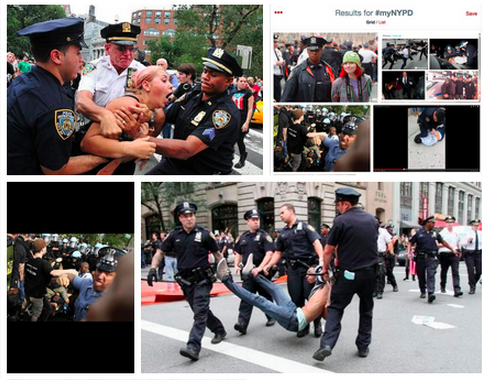
#myNYPD

What was on April’s Blog Menu, you ask? A flurry of posts covering everything from issues in ethnicity, crime stat validity, police social media involvement and ongoing Ukraine and surveillance coverage, of course! Continue reading

Standard
Dossiers

Ethnic Profiling as a Societal Institution in the Netherlands

The editors of Anthropoliteia would like to welcome this special “Dossier” from our own Paul Mutsaers

Psychologism and profiling ‘the other’

It is common knowledge in the sociology of police that law enforcers do not merely apply legal maxims but ‘employ discretion in invoking the law’, as Egon Bittner already put it in 1970 in The Functions of the Police in Modern Society. There is often not much consistency in the application of the law as beat officers have a large leeway when they operate in the blind spot of their desk superiors, that is, on the street. While on the beat, policing may be turned into a mechanism of social ordering that has the potential to significantly alter the life prospects of those who are encountered. When roaming in the districts, containing a demonstration, responding to an emergency call, mediating a conflict, investigating a homicide, or containing a riot, the police are actually (re)producing social hierarchies and differences in the settings in which they operate. Continue reading

Standard
Book Reviews

The Poetry of Barrio Libre

BL Cover2

Book Review: Gilberto Rosas, Barrio Libre: Criminalizing States and Delinquent Refusals (Duke University Press, 2012).
By Vino Avanesi, undergraduate student in Culture Studies, Faculty of Humanities (Tilburg University, the Netherlands)

The title of Rosas’ work suggests a balance between the concreteness of Mexican barrio’s and the abstraction found behind scholarly walls. One could say that ‘Barrio Libre’ did not disappoint, in fact, it surpassed expectation. In order to offer the reader a deep understanding of the phenomenon called Barrio Libre, Rosas theorizes in his work the multiple threads which come together in the phenomenon. According to Rosas these social, economic and political threads constitute the fabric of the problems underlying the emergence of Barrio Libre. Continue reading

Standard
Announcements, Book Reviews

New Feature: Book Reviews

Over the last couple of months we’ve already introduced two new suites of features: the first being a series of periodic digests from academic journals, around the web (which we call DragNet) and in the news that we’re collectively calling “Round Ups” and the second being the collection of original contributions from researchers From the Field, which we’ve further broken down into impressionistic Dispatches and more fully-developed Dossiers.

Now the editors of Anthropoliteia are happy to announce the first in a third “suite” of features which we’re collectively calling “Bibliographemes”.  The neologism is a a play on Roland Barthes’ term “biographeme,” of which Richard Elliott, drawing on Seán Burke, writes: Continue reading

Standard
Dispatches


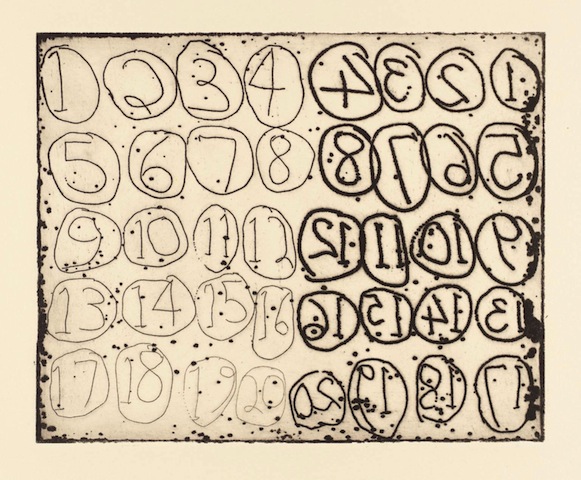
Numbers 1972, reprinted circa 1983 by Barry Flanagan 1941-2009

Numbers 1972, reprinted circa 1983 Barry Flanagan 1941-2009 Presented by Sue Flanagan, the artist’s former wife 1985 via Tate UK

Studies in Police Science often use language such as “police initiative x was found to be successful because of an x% reduction in crime.” But what does this actually mean, in any lived sense? To gain perspective I reached out to an officer I worked with during my thesis research back in 2012, to which he replied:

“Crime stats don’t really mean too much on a patrol level. Stats are used by police chiefs to say, “Look what we have done.” Crime has nothing to do with arrests. Poverty has everything to do with it. (His patrol area) used to be one of the most dangerous in the U.S. But when initiatives started pushing out the poor, crime sank to an all-time low. (His patrol area) is yuppie-ville; it has nothing to do with the police department. Most officers like to see spikes in crime when they don’t like the chief. It’s an easy way to get rid of them. When the public feels unsafe the head of the organization gets replaced. So that’s how crime states are used on a patrol level.”

So, there you have it. It appears that crime stats (at least in one officer’s opinion) join the ranks of the other politically charged facets of the criminal justice system. Now more than ever, I’m wondering exactly why these stats carry so much weight in determining which initiatives are “best”…


Wondering About Crime Stats

Aside